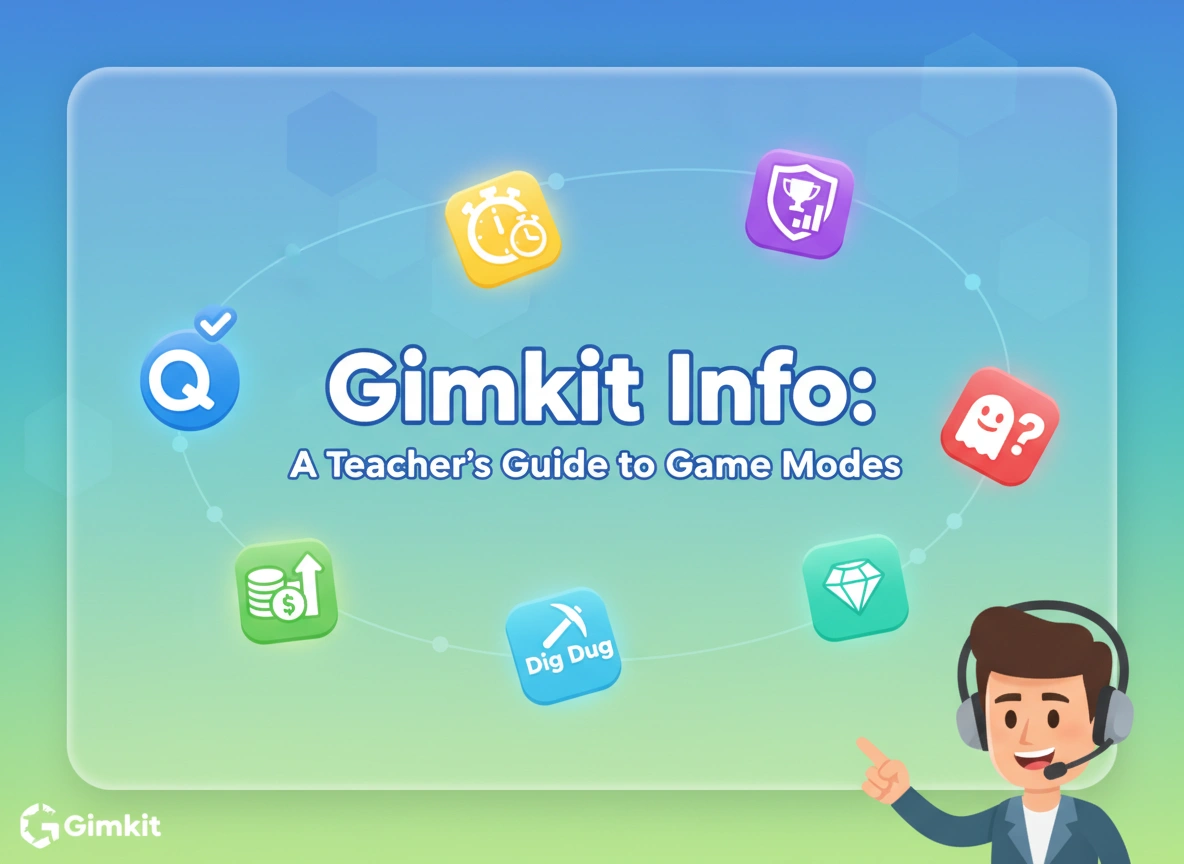
Keeping students engaged during review sessions is often one of the toughest challenges educators face. You want them to retain information, but repetitive drills usually lead to glazed eyes and wandering attention. This is where Gimkit shines. Created by a high school student who saw the need for something better, Gimkit has rapidly become a favorite tool for teachers worldwide. It transforms the standard quiz format into a dynamic, strategy-based game show that students genuinely ask to play.
Gimkit isn’t just another flashy distraction. It is a robust formative assessment tool. While students focus on earning in-game currency and buying power-ups, they are repeatedly answering content-based questions. The “magic” lies in the repetition; because students want money to buy upgrades, they willingly answer questions over and over again without realizing they are drilling core concepts.
However, the real power of the platform lies in its variety. Gimkit offers a diverse library of game modes that cater to different learning styles, class energies, and instructional goals. Knowing which mode to pick can turn a chaotic Friday afternoon into a focused, collaborative learning experience. This guide breaks down the most popular game modes and how you can leverage them effectively in your classroom.
Understanding the Core Mechanic
Before diving into specific modes, it is important to understand the basic engine that powers Gimkit. Regardless of the mode, the fundamental gameplay loop remains the same: students answer questions on their own devices. Correct answers earn them in-game cash. Incorrect answers cost them cash.
They use this cash to purchase upgrades from the shop. These upgrades might increase the money they earn per question (Money Multiplier), protect them from penalties (Streak Bonus), or allow them to sabotage other players. This economic strategy layer is what separates Gimkit from other platforms like Kahoot! or Quizizz. It adds depth. A student doesn’t need to be the fastest reader to win; they just need the best strategy.
Classic Mode: The Foundation
Classic mode is exactly what it sounds like. It is the original version of Gimkit info and arguably the best place to start if you are introducing the platform to your students for the first time.
How It Works
In Classic, students compete individually. Their goal is simply to have the most money by the end of the game. You, the teacher, set the parameters. You can end the game after a certain amount of time (e.g., 10 minutes) or when a player reaches a specific monetary goal (e.g., $1,000,000).
Classroom Application
This mode works exceptionally well for independent practice or quick “bell ringer” activities. It’s chaotic but controlled. Because students are playing for themselves, it fosters a healthy sense of competition. Use Classic mode when you want to gauge individual mastery of a topic without the pressure of a team dynamic. It allows students to experiment with the shop and understand how multipliers and power-ups work at their own pace.
Trust No One: Among Us in the Classroom
Inspired by the viral game “Among Us,” Trust No One is a social deduction mode that requires critical thinking, collaboration, and a good poker face.
How It Works
The class is divided into two groups: Crewmates and Impostors. The Crewmates’ goal is to identify the Impostors and vote them off the ship while answering questions to run “investigations.” The Impostors must blend in, answer questions to earn fake investigations, and sabotage the Crewmates without getting caught.
Classroom Application
This mode is brilliant for building class culture and communication skills. It shifts the focus from pure speed to social interaction. However, it requires a longer time commitment than Classic mode. Save this for a day when you have 20-30 minutes to spare. It’s perfect for a Friday reward or a post-exam decompression activity that still reinforces learning material. Be prepared for passionate debates as students try to convince their peers of their innocence.
The Floor is Lava: Cooperative Survival
Sometimes, you don’t want students competing against each other. You want them working together against a common threat. The Floor is Lava is the ultimate cooperative mode.
How It Works
In this mode, the entire class works together to build a structure high enough to stay above the rising lava. They earn construction materials by answering questions correctly. If the class stops answering questions or answers too many incorrectly, the lava rises. If the lava overtakes their structure, the game is over.
Classroom Application
Use this mode to foster unity. It eliminates the “winner takes all” mentality and replaces it with “we swim or sink together.” It is excellent for classes with a wide range of ability levels. Stronger students can carry the team by earning materials quickly, while struggling students can contribute without feeling spotlighted for a low score. The tension of the rising lava creates a palpable excitement in the room, making it a high-energy way to review for a major test.
Infinity Mode: The Thanos Experience
Infinity Mode introduces a unique mechanic involving “Infinity Stones.” It adds a collection element that changes the typical strategy of just hoarding cash.
How It Works
Students compete to collect six Infinity Stones. To get a stone, they must purchase it for a significant amount of in-game cash. Once a student (or team) collects all six stones, they can “snap,” which halves the balance of every other player. The goal is to collect the stones without losing your own progress.
Classroom Application
This mode appeals to students who love long-term strategy and collecting items. It works well in team settings. Teams must decide whether to invest their money in upgrades to earn cash faster or save up immediately to buy stones before their opponents do. This mode often leads to dramatic shifts in the leaderboard, keeping engagement high until the very last second.
Humans vs. Zombies: Survival of the Smartest
This team-based mode splits the class into two distinct factions with different goals, creating a dynamic tug-of-war.
How It Works
The class is divided into Humans and Zombies. Humans start with health points, and their goal is to survive. Zombies try to drain the Humans’ health. Both sides answer questions to power their attacks or defenses. However, the twist is that when a Human’s health reaches zero, they don’t just lose—they become a Zombie. The game continues until time runs out or all Humans are turned.
Classroom Application
This is often a student favorite because of the “infection” mechanic. It keeps students engaged even if they aren’t winning initially, because switching teams gives them a fresh start and a new objective. It is particularly effective for large classes where managing individual scores can be difficult. The shifting balance of power means the game is never truly decided until the end, preventing students from checking out early.
Fishtopia: A Virtual Economy
Fishtopia moves away from the pure game show aesthetic and introduces a 2D virtual world. It feels more like a video game than a quiz.
How It Works
Students control avatars in a small world where they can fish. To catch a fish, they must answer a question. Once they catch fish, they sell them for cash, which they can use to buy better fishing rods or unlock new areas of the map. The goal can be individual or collective.
Classroom Application
Fishtopia is incredibly relaxing compared to the frantic pace of other modes. It is perfect for a calmer review session. The visual element of moving a character around a map appeals to students who might find the standard menu-based interface boring. It allows for exploration and discovery, making the review process feel like an adventure rather than a chore.
Capture the Flag: Strategic Territory Control
This is a digital take on the classic playground game, requiring significant teamwork and strategic planning.
How It Works
Students are split into two teams. The objective is to capture the opposing team’s flag and bring it back to your base. To move, upgrade, and defend, students need energy, which they generate by answering questions.
Classroom Application
This mode is complex. It requires students to balance answering questions (fueling the team) with moving their characters on the map (playing the game). It is best used with classes that are already comfortable with Gimkit’s basic mechanics. Capture the Flag encourages role assignment; some students can focus purely on answering questions to generate energy, while others focus on offense or defense. This division of labor allows every student to contribute in a way that suits their strengths.
Tips for Choosing the Right Mode
With so many options, selecting the right mode can be daunting. Here is a quick framework to help you decide:
- Determine Your Goal: Do you want to assess individual knowledge (Classic), build teamwork (Floor is Lava), or just have fun while reviewing (Trust No One)?
- Assess the Energy Level: Is the class lethargic? A high-stakes mode like Humans vs. Zombies can wake them up. Is the class bouncing off the walls? A calmer mode like Fishtopia might help ground them.
- Consider Time: Some modes, like Trust No One or Capture the Flag, require setup and explanation. If you only have 10 minutes, stick to Classic or a simple Team Mode.
- Know Your Students: Some classes thrive on direct competition. Others shut down if they feel they are losing. Use cooperative modes for groups that struggle with competitive pressure.
Conclusion
Gimkit has evolved far beyond a simple question-and-answer tool. Its diverse library of game modes offers teachers a versatile toolkit for engagement. By understanding the mechanics and social dynamics of each mode, you can tailor your review sessions to meet the specific needs of your classroom.
Whether you are trying to survive the lava, find the impostor, or just earn enough cash to buy a power-up, the end result is the same: students are actively participating, interacting with the material, and having fun. In the world of education, that is a victory worth every penny of in-game currency.