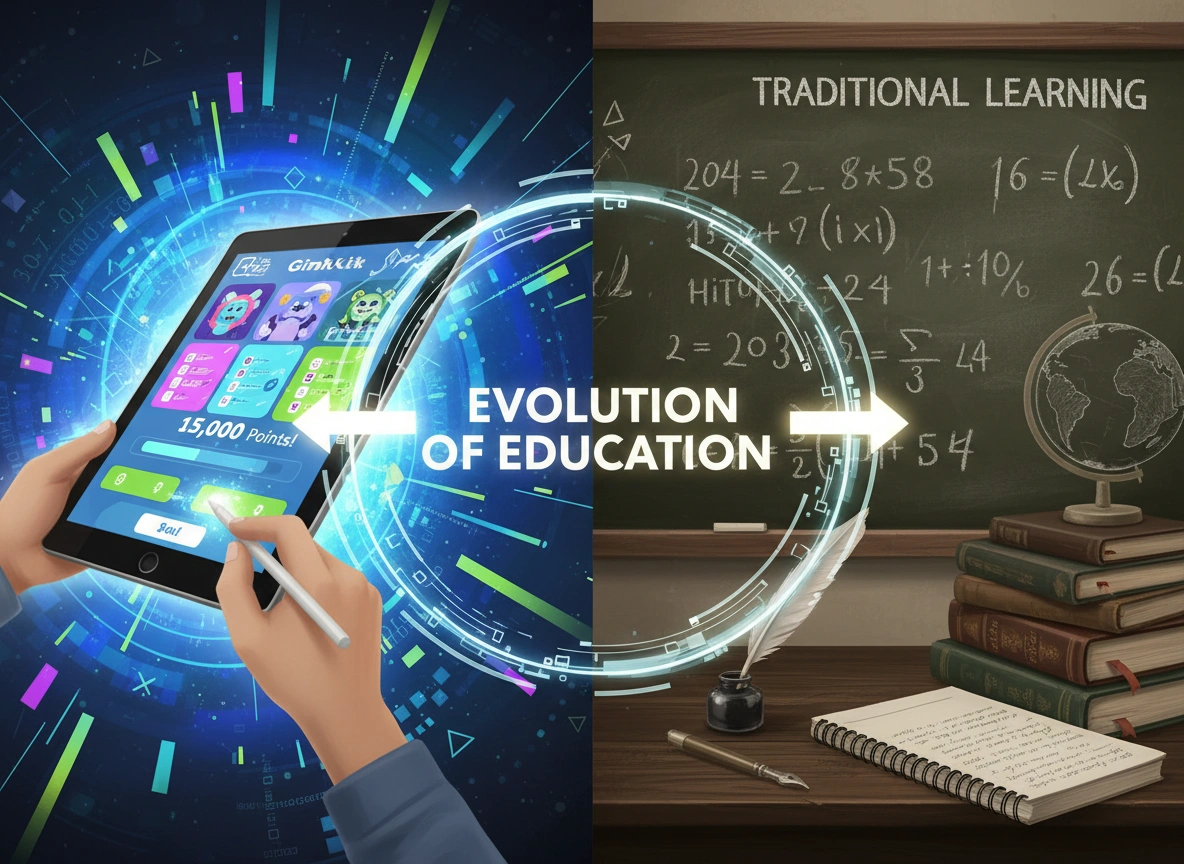
The search for effective teaching methods is as old as education itself. For generations, educators have relied on a core set of traditional learning tools: textbooks, worksheets, lectures, and flashcards. While these methods have served their purpose, the modern classroom demands more. Today’s students, digital natives accustomed to interactive and fast-paced media, often find these conventional approaches uninspiring. This is where educational technology, or EdTech, has stepped in, with platforms like Gimkit leading the charge.
Gimkit is more than just a digital quiz tool; it’s a game-show-style platform that transforms the learning experience. By comparing it directly with traditional tools, we can see exactly why it stands out. This article will explore Gimkit’s unique features, its benefits for both students and educators, and how it fosters a more dynamic and effective learning environment. We will break down how its design improves engagement, knowledge retention, and overall classroom dynamics.
The Limits of Traditional Learning Tools
Before diving into what makes Gimkit different, it’s important to understand the landscape of traditional education. Tools like worksheets, lectures, and physical flashcards have been the bedrock of classrooms for decades. They are familiar, require no technology, and can be effective for straightforward knowledge delivery.
However, they come with significant limitations:
- Passive Learning: Many traditional methods position students as passive recipients of information. A lecture or a worksheet often involves a one-way flow of knowledge, with limited opportunity for interaction or critical thinking in the moment.
- One-Size-Fits-All: Worksheets and standardized tests rarely account for different learning speeds. Students who grasp a concept quickly are left bored, while those who need more time may feel rushed and discouraged.
- Low Engagement: For a generation raised on interactive entertainment, staring at a textbook or filling out a bubble sheet can feel monotonous. This lack of engagement can lead to wandering minds and poor information retention.
- Delayed Feedback: When a student completes a worksheet or a pop quiz on paper, the feedback loop is slow. An educator must collect, grade, and return the work, a process that can take hours or even days. By the time students see their mistakes, the context of the lesson may be lost.
These tools are not obsolete, but their effectiveness is waning in an environment that requires active participation and instant feedback to hold students’ attention.
What is Gimkit and How Does It Work?
Gimkit was created by a high school student who wanted to build a game he and his friends would actually want to play in class. This origin story is key to its success. It’s not just a tool designed by educators for students; it’s a game designed by a student for students, with a powerful educational framework.
At its core, Gimkit is a live quiz learning game. The educator creates or imports a “Kit”—a set of questions on any given topic. Students join the game on their own devices and answer questions at their own pace. Each correct answer earns them in-game cash, which they can “invest” in power-ups and upgrades to earn more money even faster. This simple mechanic transforms a standard review session into an exciting, strategic competition.
The platform offers various game modes, from a classic race to the finish to team-based modes and even a version of “The Floor is Lava.” This variety keeps the experience fresh and allows educators to tailor the activity to the lesson’s objective.
Key Differentiators: Why Gimkit Stands Out
When placed side-by-side with traditional tools, Gimkit’s advantages become clear. It directly addresses the shortcomings of conventional methods through its innovative design.
1. Unmatched Student Engagement
The most significant advantage of Gimkit is its ability to captivate students. The platform doesn’t just ask for correct answers; it creates an economy within the game. Students aren’t just memorizing facts—they’re making strategic decisions. Should they spend their cash on an upgrade that gives them a streak bonus, or save up for a power-up that multiplies their earnings?
This layer of strategy gamifies the learning process in a way that flashcards or review sheets simply cannot. The fast-paced music, competitive leaderboards, and immediate rewards create an environment of excitement. Students are not just learning; they are playing, competing, and actively participating. This heightened engagement leads to longer attention spans and a more positive association with the learning material.
2. Immediate and Actionable Feedback
Unlike a paper worksheet, Gimkit provides instant feedback. When a student answers a question, they immediately know if they were right or wrong. If they are incorrect, the platform shows them the correct answer, allowing them to learn from their mistake in real-time. This immediate reinforcement is crucial for building accurate knowledge.
For educators, the benefits are just as significant. During a live game, a teacher can see a real-time report on class-wide performance. The dashboard highlights which questions are causing the most trouble, giving the educator instant insight into areas where the class may need further instruction. This data-driven approach allows teachers to adapt their lesson on the fly, rather than waiting days to discover knowledge gaps after grading a stack of papers.
3. Personalized and Differentiated Learning
Gimkit naturally supports differentiated instruction. Since students answer questions at their own pace, advanced learners can move quickly through the material without waiting for their peers. Meanwhile, students who need more time can work through the questions without the pressure of keeping up with the rest of the class.
The platform also encourages mastery. To earn cash, students must answer questions correctly. If they get one wrong, they will likely see that same question again later in the game. This repeated exposure, known as spaced repetition, is a scientifically proven method for improving long-term memory. Students are essentially creating their own personalized study guide as they play, focusing on the concepts they find most challenging.
4. Fostering Collaboration and Strategy
While classic Gimkit is an individual race, many of its most popular modes are team-based. In modes like “Humans vs. Zombies” or “Capture the Flag,” students must work together, communicate, and develop a group strategy to win. One student might be a designated “earner,” focusing on answering questions correctly, while another acts as the “buyer,” investing the team’s collective cash into strategic upgrades.
This collaborative element teaches valuable soft skills that go beyond the academic subject matter. It turns a review session into a team-building exercise, fostering a sense of community and shared purpose in the classroom. This is a stark contrast to the often isolating nature of individual worksheet completion.
The Verdict: Augmenting, Not Replacing
The comparison between Gimkit and traditional learning tools is not about declaring one obsolete. Textbooks still provide depth, and lectures can deliver foundational knowledge. However, when it comes to review, practice, and formative assessment, Gimkit offers a demonstrably more engaging and effective solution.
It transforms passive learning into active participation. It replaces delayed feedback with instant, actionable data. It moves from a one-size-fits-all model to a personalized, self-paced experience. By incorporating elements of game theory, strategy, and competition, Gimkit speaks the language of today’s students, motivating them to learn in a way that feels less like a chore and more like fun.
For educators looking to energize their classrooms, improve knowledge retention, and gain deeper insights into student understanding, Gimkit represents a powerful evolution in educational tools. It stands out not just as a fun game, but as a thoughtfully designed platform that addresses the core challenges of modern teaching.
Please click here for more info