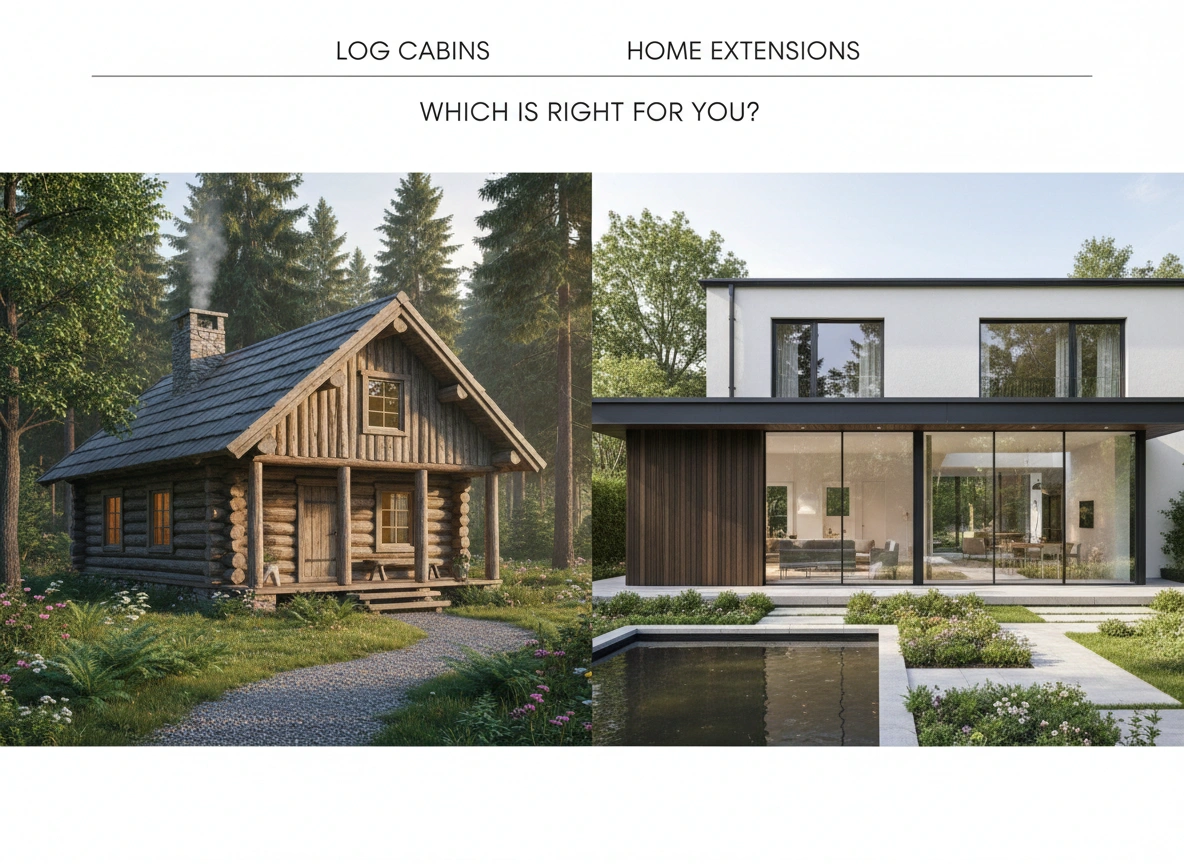
Expanding your living space is an exciting prospect, but it comes with a major decision: how to do it. For many homeowners, the choice comes down to a traditional home extension or a standalone structure like a garden log cabin. Both options offer unique benefits and present different challenges. A home extension seamlessly integrates with your existing property, while a log cabin provides a distinct, separate space.
This guide explores the differences between these two popular choices. We will compare them across key factors including cost, construction time, aesthetics, functionality, and environmental impact. By understanding the pros and cons of each, you can make an informed decision that best suits your property, lifestyle, and budget.
Cost Breakdown: The Financial Realities
The financial investment is often the first consideration for any home improvement project. The costs for extensions and log cabins can vary widely based on size, materials, and location, but there are some general patterns to consider.
Traditional Home Extension Costs
Building a traditional extension is typically a significant financial undertaking. The process involves architects, builders, and potentially multiple tradespeople like plumbers and electricians. Costs can range from $1,500 to over $2,500 per square foot, depending on the complexity and quality of the finishes.
Several factors contribute to this high cost:
- Foundation Work: Extensions require substantial foundations to be dug and poured, which must connect seamlessly to your existing home’s foundation.
- Structural Integration: Walls must be knocked down, and new structures must be carefully integrated with the old. This requires skilled labor to ensure structural integrity.
- Matching Materials: Sourcing bricks, roofing tiles, and windows that match your current home can be expensive, especially for older properties.
- Permits and Regulations: Navigating building codes and obtaining the necessary permits often adds both time and expense to the project.
Garden Log Cabin Costs
In contrast, a garden Log Cabin often presents a more budget-friendly solution. Because they are separate structures, they typically do not require the same level of invasive construction. The cost is more predictable, with many companies offering prefabricated kits at fixed prices. While custom designs will cost more, the overall expense is generally lower than a brick-and-mortar extension.
Key cost advantages include:
- Simpler Foundation: Many log cabins can be built on simpler, less expensive foundations, such as concrete slabs or ground screws.
- Reduced Labor: Prefabricated kits are designed for efficient assembly, significantly cutting down on labor hours and costs. Some homeowners even opt for a DIY approach to save more.
- Fewer Hidden Expenses: With a log cabin kit, the price often includes all necessary components, leading to fewer unexpected costs during the build.
Construction Time and Disruption
The time it takes to complete your project and the level of disruption to your daily life are crucial factors. This is where log cabins and extensions differ dramatically.
Building a Home Extension
A traditional home extension is a long and often disruptive process. The timeline can stretch from several months to over a year. You can expect a period of significant noise, dust, and a constant presence of builders on your property. For a portion of the project, part of your home may be exposed to the elements or become unusable, forcing your family to adapt to a challenging living situation. Delays are common due to weather, supply chain issues, or unforeseen structural complications.
Assembling a Garden Log Cabin
A key advantage of a log cabin is the speed of construction. Since the structure is built in your garden, the disruption to your main home is minimal. Prefabricated log cabin kits can often be assembled in a matter of days or weeks, not months. The process is clean, contained, and far less invasive. You can continue your daily life with little to no interruption. This efficiency means you can start enjoying your new space much sooner.
Aesthetics and Design Flexibility
The visual appeal of your new space is deeply personal. Both options offer different aesthetic paths.
The Cohesive Look of an Extension
A well-designed extension should look like it was always part of the original house. It uses the same architectural style and materials to create a seamless, unified appearance. This approach is ideal for those who want to increase their home’s square footage without altering its fundamental character. You have the flexibility to design the interior layout exactly as you wish, creating a new kitchen, living area, or bedroom that flows naturally from the existing rooms.
The Rustic Charm of a Log Cabin
A log cabin offers a completely different aesthetic. It creates a rustic, natural retreat in your backyard. The warm tones of the wood and classic design provide a sense of escape and tranquility. This separation from the main house is often the desired effect, creating a distinct zone for work, hobbies, or relaxation. While you can customize the interior to be modern or traditional, the exterior will always have the unique character that only natural wood can provide.
Functionality and Purpose
How do you plan to use your new space? The answer will heavily influence your decision.
Integrated Living with an Extension
Extensions are perfect for expanding your core living areas. If you need a larger kitchen that opens into a dining area, an extra bedroom for a growing family, or a bigger living room, an extension is the logical choice. It expands the main footprint of your home, making daily life more comfortable and integrated. It is the best option for adding essential rooms that need to be connected to the rest of the house.
Versatile, Detached Space with a Log Cabin
A log cabin excels at providing a dedicated, separate space away from the main house. This makes it incredibly versatile for a variety of uses:
- Home Office: Create a quiet, professional environment free from household distractions.
- Garden Gym: Build a private fitness space without cluttering your home.
- Art or Music Studio: Pursue your creative hobbies in a dedicated, inspiring setting.
- Guest Suite: Offer visitors a comfortable and private place to stay.
- Entertainment Room: Design a cinema, bar, or game room for relaxing and socializing.
The physical separation is a key benefit, allowing for a clear distinction between home life and other activities.
Environmental Impact
For environmentally conscious homeowners, the materials and building processes matter.
A traditional extension often has a larger carbon footprint. Materials like concrete, bricks, and plaster are energy-intensive to produce and transport. Construction waste can also be substantial.
Log cabins, on the other hand, are typically seen as a more sustainable choice. Wood is a renewable resource, and when sourced from responsibly managed forests, it is an eco-friendly building material. Wood also has excellent natural insulating properties, which can make the cabin more energy-efficient to heat and cool. The construction process for a prefabricated cabin also tends to produce less waste.
Conclusion: Making the Right Choice for You
Both traditional home extensions and garden log cabins are excellent ways to add valuable space to your property. The right choice depends entirely on your specific needs, priorities, and budget.
Choose a traditional extension if:
- You need to expand your primary living areas, like a kitchen or bedroom.
- A seamless, integrated look is important to you.
- Your budget can accommodate a larger, more complex construction project.
- You are prepared for a longer, more disruptive building process.
Choose a garden log cabin if:
- You need a separate, dedicated space for an office, gym, studio, or guest room.
- You prefer a faster, less disruptive, and more predictable building process.
- You are working with a more constrained budget.
- You appreciate the unique aesthetic and potential environmental benefits of a wooden structure.
Ultimately, by weighing these factors—cost, time, function, and style—you can confidently decide which path will best enhance your home and your lifestyle.