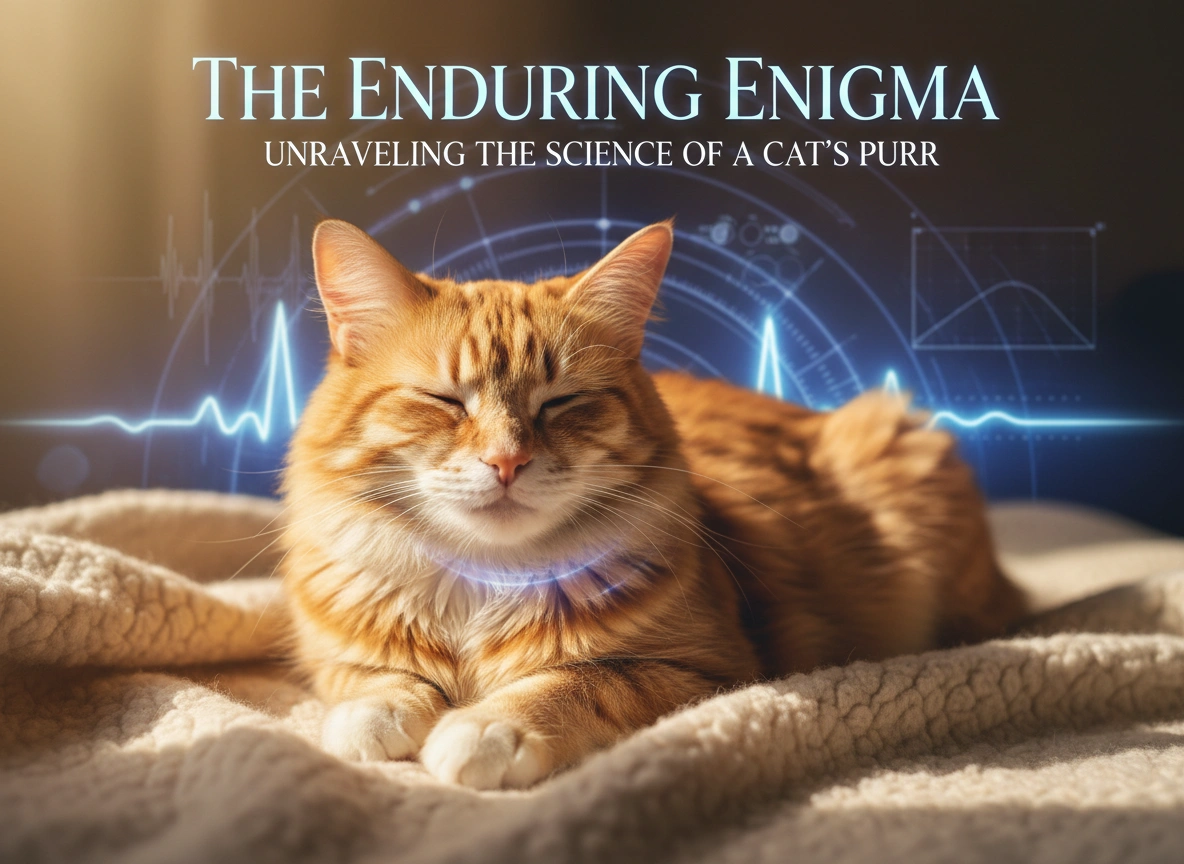
It is one of the most comforting sounds in the world: the gentle, rhythmic rumble of a contented cat. For cat owners, this vibration is often synonymous with happiness and affection. When a feline curls up on your lap and begins to purr, it feels like a clear sign of trust and comfort. While this is certainly true, the science behind this unique vocalization reveals a far more complex and fascinating story. The purr is not just an expression of pleasure; it is a sophisticated tool for communication, healing, and survival. Delving into the mechanics and motivations behind purring uncovers a remarkable biological ability that benefits cats in ways we are only just beginning to understand.
The Mechanical Mystery: How Do Cats Purr?
For years, the exact physical mechanism of the purr was a subject of scientific debate. Unlike other vocalizations such as meowing or hissing, which are produced by passing air over the vocal cords in a single direction, purring is different. A cat can purr while both inhaling and exhaling, creating a continuous, resonant sound. This unique quality puzzled researchers. Early theories suggested it was linked to the circulatory system and blood flow, but these ideas were eventually disproven.
The modern understanding points to the cat’s larynx and nervous system. The process begins in the brain, where a “neural oscillator” sends rhythmic signals to the laryngeal muscles, which control the vocal cords. These signals cause the muscles surrounding the glottis—the opening between the vocal cords—to twitch and vibrate at an incredibly rapid rate, around 25 to 150 times per second (25-150 Hz). As the cat breathes, air passing through this vibrating opening creates the characteristic purring sound. This process is involuntary, much like a human’s heartbeat, and is controlled by the central nervous system. This explains why cats can purr continuously for long periods without conscious effort, even while sleeping or eating.
This neurological control also explains why not all felines can purr. The ability is typically found in smaller cat species, including domestic cats, bobcats, cheetahs, and pumas. Larger cats like lions, tigers, and jaguars have a different laryngeal structure. The bones in their hyoid apparatus, located in the throat, are more flexible, which allows them to produce a mighty roar. In contrast, the hyoid bones of purring cats are completely ossified and rigid, enabling the vibrations necessary for a purr but not the mechanics for a roar.
More Than Just Happy: The Many Meanings of a Purr
While we most often associate purring with contentment, cats employ this sound in a wide variety of situations, many of which are not related to happiness at all. Understanding the context is key to decoding what a cat is trying to communicate.
- Contentment and Affection: This is the classic interpretation. A cat purring while being petted, resting in a sunny spot, or kneading a soft blanket is expressing comfort and security. It is a sign that they feel safe and relaxed in their environment and in your presence.
- A Call for Care: Kittens are born blind and deaf, but they can purr within a few days of birth. This early purring is a vital communication tool between a mother cat and her litter. The vibrations help guide the mother to her kittens and let her know they are healthy and close by. The mother, in turn, purrs to soothe her kittens and create a bonding experience.
- Solicitation and Request: Experienced cat owners may notice a specific type of purr when it’s close to feeding time. Research has identified what is known as a “solicitation purr,” which embeds a high-frequency cry, similar to a human baby’s cry, within the lower-frequency rumble of a normal purr. This sound is specifically designed to be difficult for humans to ignore, tapping into our innate nurturing instincts and making us more likely to respond by providing food or attention.
- Coping with Stress and Pain: Paradoxically, cats also purr when they are frightened, injured, or even nearing the end of their life. Vets frequently report cats purring during examinations or while recovering from surgery. In these instances, the purr is not a sign of happiness but a self-soothing mechanism. It is believed to be a way for the cat to calm itself down in a stressful situation, similar to how a human might hum or whistle when nervous.
The Healing Frequency: A Built-In Therapeutic Tool
Perhaps the most remarkable aspect of a cat’s purr is its potential as a self-healing mechanism. The specific frequencies at which cats purr—between 25 and 150 Hz—coincide with vibrational frequencies that have been shown in scientific studies to have therapeutic effects on bone and tissue.
Research into vibrational therapy has demonstrated that frequencies in the 25-50 Hz and 100-200 Hz ranges can promote bone density and healing. For example, exposing bone fractures to these low-frequency vibrations can accelerate the mending process. The dominant frequency for a domestic cat’s purr falls squarely within the 25-50 Hz range. This has led to a compelling theory: purring may be a low-energy way for cats to stimulate their muscles and bones.
This “vibrational therapy” could offer several survival advantages. Cats are known for conserving energy, often sleeping for many hours a day. Purring might help keep their bones and muscles in good condition without the need for strenuous activity. It could explain why cats seem to have fewer instances of orthopedic issues like hip dysplasia and ligament problems compared to dogs. Furthermore, after a fall or injury, a cat’s purr might actively aid its recovery. The vibrations could help to:
- Heal bones and wounds.
- Build muscle and repair tendons.
- Reduce pain and swelling.
- Ease breathing and reduce respiratory distress.
This incredible biological function essentially gives cats a built-in form of physical therapy, promoting healing and maintaining physical health with minimal energy expenditure.
A Sound Conclusion
The familiar purr of a domestic cat is far more than a simple expression of joy. It is a complex, multi-purpose tool honed by evolution for communication, self-soothing, and physical healing. From the laryngeal vibrations controlled by a neural oscillator to the specific therapeutic frequencies it produces, the purr is a testament to the sophisticated biology of our feline companions. It allows a kitten to connect with its mother, an adult to solicit food, a frightened animal to calm itself, and an injured cat to mend its own body.
The next time you hear that gentle, resonant rumble, take a moment to appreciate the science behind the sound. You are not just witnessing an act of contentment; you are experiencing a remarkable biological phenomenon that encapsulates the resilience, adaptability, and enduring mystery of the cat.Please visit website for more info.
You may also read:Top 10 Unique Dog Names to Strengthen Your Bond