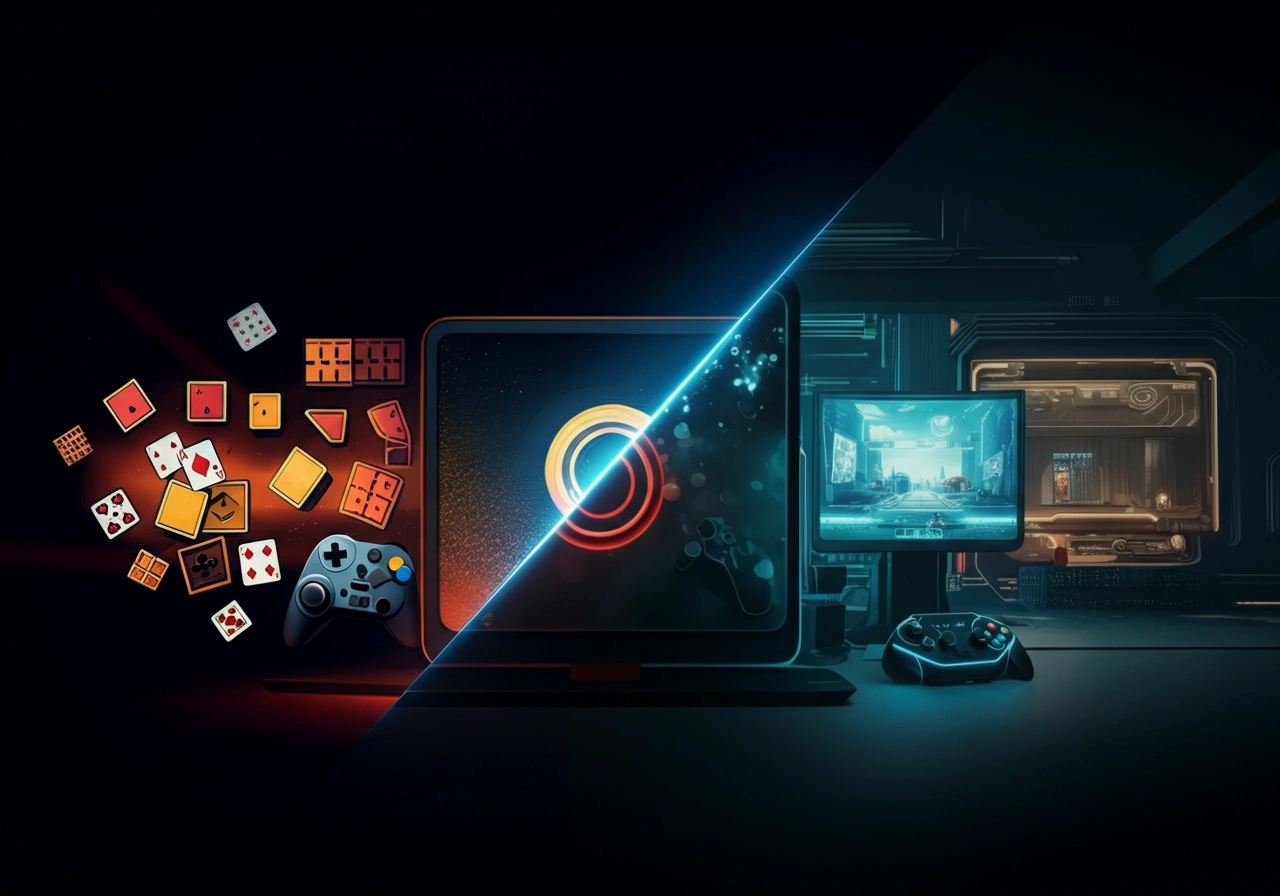
The iGaming industry has transformed dramatically over the past two decades. What began as a niche market with simple, browser-based games has blossomed into a global powerhouse defined by cutting-edge technology and deeply engaging user experiences. This journey from basic Flash games to fully immersive virtual worlds reflects not just technological progress, but a fundamental shift in how we interact with digital entertainment. We will explore this evolution, charting the course from its humble beginnings to the exciting frontiers of today.
This article will trace the key milestones in iGaming’s development. We will cover the foundational era of Flash, the pivotal transition to HTML5, the explosive growth of mobile gaming, and the current wave of immersive technologies like Virtual and Augmented Reality. By examining these shifts, we gain a clearer understanding of how the industry has adapted and what the future may hold.
The Dawn of Digital Wagering: The Flash Era
In the late 1990s and early 2000s, Adobe Flash (then Macromedia Flash) was the engine of online interactivity. For the nascent iGaming industry, it was a game-changer. Flash enabled developers to create visually rich, animated games that could run directly in a web browser without requiring users to download bulky software. This accessibility was crucial for attracting a mainstream audience.
What Made Flash So Dominant?
Flash-based casinos and poker sites offered a significant leap forward from the static, text-based platforms that preceded them. Players could now experience spinning reels, animated card shuffles, and interactive bonus rounds that mimicked the feel of a physical casino. These early games were simple by today’s standards, often featuring basic graphics and repetitive sound effects, but they were revolutionary for their time.
The reliance on Flash, however, came with significant drawbacks. The platform was a proprietary plugin, meaning users had to have it installed and updated. It was also resource-intensive, often leading to slow performance and browser crashes, especially on less powerful computers. More importantly, Flash was plagued by security vulnerabilities, making it a frequent target for malicious actors. Its biggest limitation, however, would be its incompatibility with the next wave of computing: mobile devices.
The Mobile Revolution and the Shift to HTML5
The launch of the iPhone in 2007 marked a turning point for the entire digital world, and iGaming was no exception. Apple’s decision not to support Flash on its iOS devices sent a clear message to developers: the future was mobile, and a new technology standard was needed. That standard was HTML5.
Embracing a New Standard
HTML5, along with CSS3 and JavaScript, provided a powerful, open-source alternative to Flash. It allowed developers to create rich, interactive content that could run natively within any modern web browser, regardless of the device or operating system. This “write once, run anywhere” capability was the key to unlocking the mobile market.
The transition from Flash to HTML5 was a massive undertaking for the iGaming industry. It required operators and developers to rebuild their entire game libraries from the ground up. While challenging, this migration brought immense benefits:
- Cross-Platform Compatibility: Games were now instantly accessible on desktops, smartphones, and tablets without plugins.
- Improved Performance: HTML5 was lighter and more efficient, leading to faster loading times and smoother gameplay.
- Enhanced Security: By eliminating the need for a third-party plugin, HTML5 reduced the attack surface for security threats.
- Richer Media: The new standard supported high-quality audio and video integration, paving the way for more sophisticated game designs.
This technological shift fundamentally altered user behavior. Players were no longer tethered to their desktops. They could now enjoy their favorite slots or table games during their commute, on a lunch break, or from the comfort of their couch. The convenience of mobile access caused a massive surge in player engagement and drove unprecedented growth for the industry.
The Rise of Mobile-First Design
As mobile devices became the primary platform for a growing number of players, the industry’s focus shifted from simply making desktop games work on mobile to designing experiences specifically for the small screen. This “mobile-first” approach prioritized user experience on handheld devices.
Optimizing for the On-the-Go Player
Mobile-first design involves more than just responsive layouts. It requires a deep understanding of how users interact with their phones. Game interfaces were redesigned with larger buttons, simplified menus, and intuitive touch controls. Gameplay sessions were often structured to be shorter, catering to players looking for a quick burst of entertainment.
Furthermore, developers began leveraging native mobile features to enhance the gaming experience. Push notifications could alert players to new promotions or bonus offers, while biometric authentication (like fingerprint or face ID) streamlined the login process. The integration of mobile payment systems made deposits and withdrawals faster and more convenient than ever before. This focus on a seamless and optimized mobile experience cemented mobile’s position as the dominant force in iGaming.
The New Frontier: Immersive Experiences with VR and AR
With mobile gaming firmly established, the industry is now looking toward the next technological horizon: immersive experiences. Virtual Reality (VR) and Augmented Reality (AR) are poised to transform iGaming from a two-dimensional activity into a three-dimensional, fully realized event.
Stepping Inside the Game with Virtual Reality
VR technology offers the ultimate level of immersion. By wearing a VR headset, players can step into a virtual casino, walk around the floor, sit down at a poker table with other players’ avatars, and interact with the game in a completely new way. Instead of clicking a button to spin a roulette wheel, a player can physically place their chips on the table and watch the virtual ball land.
Several companies have already launched VR casinos, offering a glimpse into this future. These platforms create a sense of presence and social interaction that is impossible to replicate on a flat screen. While still a niche segment due to the cost and hardware requirements of VR headsets, the potential is enormous. As the technology becomes more affordable and accessible, VR is expected to become a significant part of the iGaming landscape.
Enhancing Reality with Augmented Reality
While VR replaces the user’s reality, Augmented Reality enhances it. AR overlays digital information and graphics onto the real world, viewed through a smartphone or smart glasses. In an iGaming context, AR could project a virtual slot machine onto your coffee table or deal a hand of blackjack onto your kitchen counter.
AR also opens up exciting possibilities for live sports betting. Imagine watching a football game while real-time stats and betting odds are displayed directly on the field through your device. This blend of the digital and physical worlds creates a more integrated and dynamic betting experience. AR’s lower barrier to entry—requiring only a smartphone—suggests it may see wider adoption more quickly than VR.
The Future of iGaming
The evolution of iGaming from simple Flash games to immersive VR worlds is a story of continuous innovation. Each technological leap has been driven by a desire to create more engaging, accessible, and secure experiences for players. This journey has not only expanded the market but has also fundamentally changed user expectations.
Looking ahead, the industry will continue to be shaped by technological advancements. The integration of artificial intelligence and machine learning will lead to more personalized gaming experiences, while the adoption of blockchain technology could introduce new levels of transparency and security. The line between gaming and entertainment will continue to blur, creating a future where iGaming is more social, interactive, and immersive than ever before. The journey is far from over, and the next chapter promises to be the most exciting yet.
You may also visit this website บาคาร่า