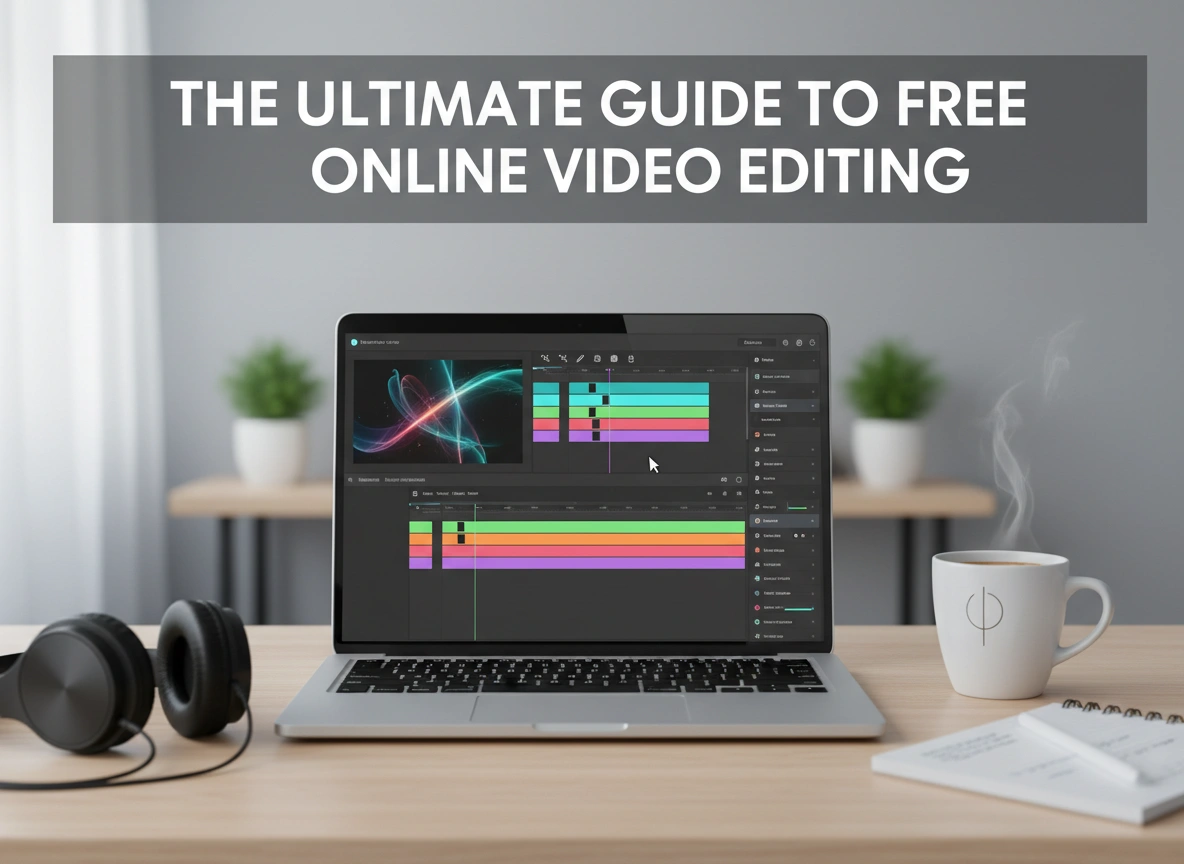
The demand for high-quality video content has never been greater. From social media stories to professional marketing campaigns, video is the leading way we communicate, entertain, and learn. For a long time, creating polished videos required expensive software and powerful computers. That barrier is now gone. Free online video editors have emerged as powerful, accessible, and user-friendly alternatives, leveling the playing field for creators everywhere.
This guide will walk you through everything you need to know about the world of free online video editing. We will explore the benefits of these tools, review the top platforms available today, and provide a step-by-step tutorial to get you started. You will learn how to transform your raw footage into engaging content without spending a dime on software.
Why Choose Free Online Video Editing?
Moving your video editing workflow to a browser-based tool offers several distinct advantages over traditional desktop software. The “free” aspect is just the beginning. These platforms are designed for efficiency, collaboration, and accessibility, making them an excellent choice for a wide range of users, from small business owners to aspiring content creators.
Unbeatable Accessibility and Convenience
The most significant benefit is the ability to edit from anywhere, on almost any device. Because the software runs in the cloud, you are no longer tied to a single, high-powered computer. You can start a project on your laptop, make a few tweaks on a tablet, and share it from a different computer. All your projects, files, and assets are saved to your online account, not your local hard drive. This eliminates the need for large installations and saves precious storage space.
Cost-Effectiveness Without Compromise
Free online editors provide a robust set of features that were once exclusive to paid programs. You can access tools for trimming, splitting, adding text, applying filters, and incorporating music. While some platforms have premium tiers, their free versions are often more than enough for creating professional-looking videos for social media, presentations, or personal projects. This allows you to allocate your budget to other important areas, like cameras or lighting.
Simplified and Intuitive User Interfaces
Unlike complex professional software like Adobe Premiere Pro or Final Cut Pro, online editors are built with the user in mind. They feature intuitive drag-and-drop interfaces, clear menus, and helpful tutorials. This drastically reduces the learning curve, empowering beginners to start creating polished videos in minutes rather than weeks. The focus is on getting your ideas from concept to completion as smoothly as possible.
Built-in Collaboration Features
Many online platforms are designed for teamwork. Multiple users can often access and work on the same project, leaving comments and making edits in real-time. This is a game-changer for marketing teams, school projects, and any situation where feedback from multiple stakeholders is required. It streamlines the review process and ensures everyone is on the same page without the hassle of sending large files back and forth.
The Best Free Online Video Editing Platforms
The market for online video editors is growing, but a few platforms stand out for their features, ease of use, and generous free plans.
CapCut
Originally a mobile app, CapCut has expanded into a powerful, browser-based online editor that is completely free. It is packed with features that appeal to social media creators, including trendy effects, auto-captions, and a vast library of royalty-free music and sound effects. Its timeline-based editor feels professional yet remains easy to navigate.
- Best for: TikTok and Instagram Reels creators who want access to trending effects and easy captioning.
- Key Features: Auto-caption generation, text-to-speech, background remover, huge library of effects and transitions.
Clipchamp
Acquired by Microsoft and now integrated with Windows, Clipchamp offers a fantastic free tier that includes all the essential editing tools. Its clean interface makes it easy to trim clips, add titles, and adjust colors. The free plan allows for unlimited watermark-free exports at up to 1080p HD resolution, which is a major advantage.
- Best for: Beginners and general users who need a reliable, straightforward editor for high-quality exports.
- Key Features: Unlimited 1080p exports, screen and webcam recorder, stock library, and easy-to-use templates.
Canva
While known primarily as a graphic design tool, Canva has a surprisingly capable video editor. It’s perfect for users who are already familiar with the Canva ecosystem. The editor uses a simple, layer-based timeline that is great for creating short promotional videos, social media ads, or video presentations. It offers a massive library of templates, stock footage, animations, and graphics.
- Best for: Marketers, small business owners, and anyone who needs to create branded video content quickly.
- Key Features: Huge template library, brand kit integration (pro feature, but useful), massive element and stock photo/video library.
How to Edit a Video Online: A Step-by-Step Guide
Let’s walk through the basic process of creating a video using a typical online editor. We’ll use concepts common to platforms like CapCut and Clipchamp.
Step 1: Create a Project and Upload Your Media
First, sign up for an account on your chosen platform. Once you’re in, you will see an option to “Create a new video” or a similar button. This will open the editor interface. The first thing you need to do is upload your media files—the video clips, images, and audio you plan to use. Look for an “Upload” or “Import Media” button and select the files from your computer.
Step 2: Assemble Your Clips on the Timeline
The timeline is the long panel at the bottom of the screen. This is where you will build your video. Drag your uploaded video clips from the media library down onto the timeline. You can arrange them in the order you want them to appear in your final video. To see a preview of your work, use the playback controls on the preview window.
Step 3: Trim and Split Your Clips
Your raw clips are probably longer than you need. To trim a clip, select it on the timeline. Handles will appear at the beginning and end. Drag these handles inward to shorten the clip to just the part you want to keep.
To split a clip into two separate parts, move the playhead (the vertical line that indicates your position in the video) to the exact spot where you want to make a cut. Then, click the “Split” button, which usually looks like a pair of scissors. You can now delete unwanted sections or insert other clips between the two new parts.
Step 4: Add Text, Transitions, and Music
Now it’s time to add some polish.
- Text: Find the “Text” or “Titles” tab. Choose a style you like, and drag it onto a new track on the timeline above your video clips. You can then customize the text, font, size, and color.
- Transitions: To smooth the change from one clip to the next, add a transition. Go to the “Transitions” tab and drag an effect, like a fade or a wipe, to the junction between two clips on the timeline.
- Music: Navigate to the “Audio” or “Music” tab. You can either upload your own music file or choose a track from the platform’s stock library. Drag the audio file onto the timeline on a track below your video clips. Adjust its volume so it doesn’t overpower any spoken words.
Step 5: Export Your Final Video
Once you are happy with your creation, it’s time to export. Click the “Export” button, which is usually in the top-right corner. You will be prompted to choose a video quality or resolution. For most online uses, 1080p is the ideal choice. The platform will then process, or “render,” your video. When it’s finished, you can download the final MP4 file to your computer and share it with the world.
Tips for Getting the Most Out of Free Tools
- Understand the Limitations: Free plans may come with watermarks, limited export resolutions, or caps on cloud storage. Read the terms of the free plan before you start so you know what to expect.
- Use Stock Libraries Wisely: Take full advantage of the built-in libraries of stock footage, music, and sound effects. This can elevate your video’s production value without costing you anything.
- Keep It Simple: Don’t overuse effects and transitions. Clean cuts, simple titles, and a good background track are often more effective than a video cluttered with distracting animations.
- Focus on Good Audio: Poor audio can ruin an otherwise great video. Use the editor’s tools to adjust volume levels and ensure any background music doesn’t overpower narration. If possible, record your audio with a decent microphone.
- Leverage Templates: If you’re short on time or inspiration, templates are your best friend. They provide a pre-built structure that you can customize with your own clips and branding.
The Future of Video Creation is Online
Free online video editors have democratized content creation. They empower anyone with a story to tell or a product to sell to produce high-quality videos without technical barriers or financial investment. By offering powerful features in an accessible, browser-based package, these tools are an invaluable resource for students, entrepreneurs, marketers, and hobbyists alike.
Whether you choose the trendy effects of CapCut, the straightforward reliability of Clipchamp, or the design-focused workflow of Canva, you have everything you need to start creating compelling video content today. Experiment with these platforms, practice the fundamental editing techniques, and unlock your potential as a video creator…
Please visit this website for more info.