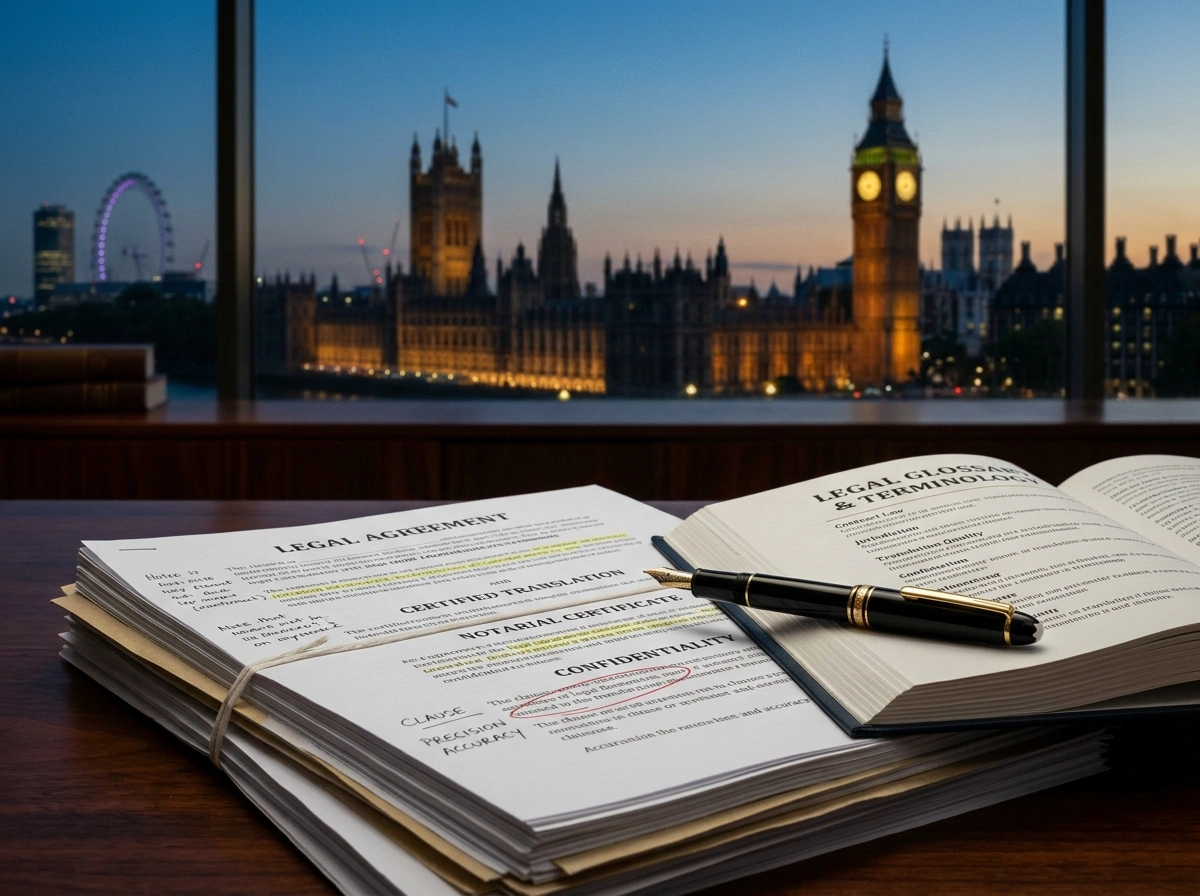
London stands out as one of the most linguistically diverse cities on the planet. According to the 2021 Census, residents speak over 100 different languages across the capital’s 32 boroughs, with more than 2.2 million people born outside the UK. This massive cultural melting pot creates a constant need for official documents to be translated into English for various administrative, legal, and academic purposes.
If you are applying for a visa, submitting evidence to a court, or registering a foreign marriage, you will eventually need a professional to translate your paperwork. Navigating the UK legal and immigration systems is stressful enough without having to worry about language barriers. Submitting a poorly translated document can lead to application rejections, delayed court proceedings, or significant financial losses.
Finding a trustworthy translator requires more than a simple internet search. You need to verify credentials, understand Home Office requirements, and ensure your private information remains secure. This guide will walk you through exactly what to look for when selecting a provider, helping you secure translations that meet the strict standards of UK institutions.
Why Accuracy Matters in Legal Documents
Legal translation leaves absolutely zero room for creative interpretation. A standard commercial translator might swap a few words to make a marketing brochure sound more appealing, but doing this with a legal document can completely alter its legal binding.
When you submit documents to the Royal Courts of Justice, the Old Bailey, or an immigration tribunal, the magistrates and judges rely entirely on the English translation to understand the evidence. A misplaced comma or an incorrectly translated legal term can misrepresent a contract clause, invalidate a power of attorney, or cast doubt on witness testimonies.
The same strict standards apply to immigration processes. UK Visas and Immigration (UKVI) agents review thousands of documents every week. If a birth certificate, marriage certificate, or bank statement contains errors, the Home Office can delay or outright deny the visa application. Accuracy guarantees that your foreign-language documents carry the exact same legal weight in English as they do in their original language.
Key Factors to Consider When Choosing a Service
Selecting the right translation agency involves looking past flashy marketing to evaluate their actual operational standards. As you review potential providers, keep these core factors top of mind:
Language Availability and Native Proficiency
Your chosen service must offer your required language pair, but they should also guarantee that the translator is a native speaker of the target language. Translating legal nuances from Bengali, Polish, or Arabic into English requires a deep understanding of both cultural contexts and specific legal terminologies.
Turnaround Times and Delivery
Legal matters usually operate on strict deadlines. Whether you are racing to meet a university admissions cutoff or preparing for an upcoming court date, you need a service that delivers on time. Ask potential providers about their standard turnaround times. Many professional agencies complete standard documents in one to three business days, while also offering expedited next-day delivery for urgent requests.
Customer Support and Communication
A reliable agency will communicate clearly from the moment you request a quote. They should explain their process, outline the exact costs, and be available to answer any questions about UK formatting requirements.
Understanding Certifications and Credentials
Not all translations are created equal, and not all translators are qualified to handle official documents. In the United Kingdom, government bodies, courts, and universities require a specific format known as a certified translation.
A certified translation includes a signed statement of accuracy from the translator or the translation agency. This statement confirms that the document is a true and accurate representation of the original text. It also typically includes the date of the translation, the full name of the translator or agency representative, and their contact information.
If you are applying for a visa or settlement, the Home Office mandates these strict certification rules. Submitting a standard, uncertified translation will almost certainly result in your application being rejected. To ensure your documents meet all UKVI and institutional standards, you should partner with experienced professionals who specialize in legal translation services london. They understand exactly what phrasing and formatting the Home Office expects to see.
Furthermore, if you need to use a UK document abroad, you might require an Apostille. Some agencies offer apostille services alongside their translations, streamlining the process so your documents are legally recognized in other Hague Convention member countries.
The Importance of Confidentiality and Security
Legal documents contain highly sensitive personal and financial data. Passports, medical records, bank statements, and divorce decrees must be handled with the utmost care. When you hand these files over to a third party, you need absolute confidence that your data is safe.
Before hiring a translation service, review their security protocols. They should offer a secure, encrypted platform for uploading and downloading your files. Avoid sending highly sensitive documents through standard, unencrypted email if possible.
Additionally, check their data retention policies. A reputable agency will comply strictly with the General Data Protection Regulation (GDPR). They should explicitly state how long they store your documents, who has access to them, and how they destroy the files once the translation is complete. Many professional agencies will also readily sign a Non-Disclosure Agreement (NDA) for highly sensitive corporate or legal cases.
Assessing Industry-Specific Expertise
Fluency in two languages does not make someone a legal translator. The legal field has its own distinct vocabulary, and terms often have no direct equivalent in another language.
When evaluating a translation service, ask about the background of their linguists. Have they worked with court documents before? Do they understand the difference between civil law and common law systems?
A translator handling an academic transcript for admission to UCL or Imperial College London needs to understand educational grading systems. Conversely, a linguist translating an employment contract or a corporate merger agreement must understand business law.
Look for agencies that assign projects based on subject-matter expertise. If you need a police clearance certificate translated, the agency should assign it to someone with a proven track record in criminal and immigration documents. This specialized knowledge prevents critical errors that a generalist might overlook.
Comparing Costs vs. Quality
Budget is always a consideration, especially when legal fees and visa applications are already stretching your finances. However, choosing a translation service based solely on the lowest price often leads to hidden costs down the line.
Some providers hook clients with exceptionally low rates, only to use automated translation software and bypass essential human proofreading. Machine translation struggles significantly with complex legal formatting and context. If a cheap translation gets your visa denied, you will end up paying for a fresh translation, a new application fee, and potentially legal counsel to fix the mess.
Instead of hunting for the cheapest option, look for transparent pricing. Reputable agencies usually charge per page or per word. For example, standard certified translations often start around £29.95 per page.
Request a comprehensive quote upfront. The price should include the translation, proofreading, the certification statement, and delivery. By investing in a professional service from the start, you buy peace of mind knowing the document will be accepted on the first submission.
Making Your Final Choice for Official Documents
Securing an accurate, certified translation is a critical step in any legal, academic, or immigration journey in the UK. Because London institutions like the Home Office, the Royal Courts of Justice, and top-tier universities enforce incredibly strict standards, you cannot afford to cut corners.
Take the time to evaluate your options carefully. Verify that the agency provides UKVI-compliant certifications, employs translators with specific legal expertise, and utilizes robust data security measures. Do not hesitate to ask questions about their experience with your specific type of document, and always demand transparent pricing before handing over your paperwork.
By partnering with a dedicated, professional translation service, you eliminate unnecessary risks. You can move forward with your visa application, court case, or university enrolment knowing your documents are accurate, secure, and officially recognized by all UK authorities.