
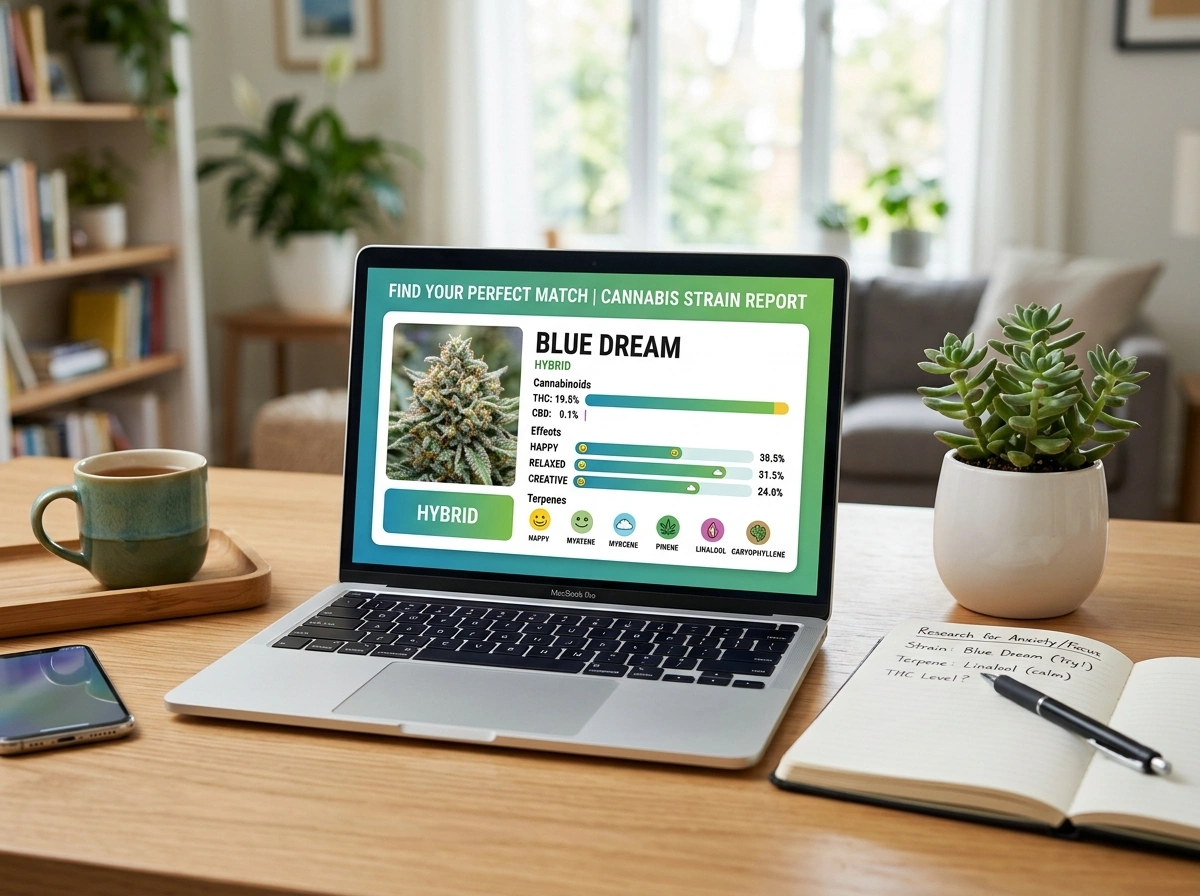
Walking into a dispensary for the first time can feel overwhelming. Dozens of jars line the shelves, each with names like Blue Dream, Granddaddy Purple, or Sour Diesel. The budtender rattles off percentages and effects, and suddenly you’re nodding along without a clue what any of it means. Sound familiar?
Here’s the good news: you don’t have to guess. A strain report gives you all the information you need to make a smart, confident choice. Think of it as a nutrition label for cannabis. Once you learn how to read one, you can match a product to exactly what you want, whether that’s a calm evening, a creative spark, or a good night’s sleep.
This guide breaks down everything a first-time user needs to know. By the end, you’ll know how to turn a wall of confusing data into a clear decision.
Why a Strain Report Matters for Beginners
Cannabis affects everyone differently. Two people can try the same product and have completely opposite experiences. That’s because each strain has its own chemical makeup, and your body responds to those chemicals in its own way.
A strain report removes the mystery. Instead of relying on a flashy name or a salesperson’s pitch, you get real data about what’s inside the product and what it’s likely to do. For first-time users, this is huge. It lowers the risk of an unpleasant experience and helps you start your journey on the right foot.
Tools like the Strain Report make this process even easier by collecting detailed information in one place. You can compare options side by side before you ever spend a dollar.
Understanding the Three Main Strain Types
Before you dive into the numbers, it helps to understand the three broad categories you’ll see again and again. These categories give you a general sense of what to expect, though they’re more of a starting point than a strict rule.
Indica
Indica strains are known for their relaxing, body-focused effects. People often reach for Indica when they want to unwind, ease tension, or settle in for the night. If you’ve heard the phrase “couch lock,” that usually refers to a heavy Indica.
Best for: Evening use, relaxation, sleep, and easing physical discomfort.
Sativa
Sativa strains tend to be more energizing and uplifting. They’re often described as a “head high” that boosts mood and focus. Many users enjoy Sativa during the day when they want to stay active and engaged.
Best for: Daytime use, creativity, socializing, and motivation.
Hybrid
Hybrids blend Indica and Sativa genetics. Depending on the mix, a hybrid can lean more toward relaxation, more toward energy, or sit somewhere in the middle. They offer flexibility, which makes them a popular choice for newcomers.
Best for: Balanced effects and users who want a little of both worlds.
Keep in mind these categories are guidelines, not guarantees. The real details live in the strain data, which we’ll cover next.
How to Read the Data on a Strain Report
This is where a strain report truly earns its value. Let’s break down the key numbers and what they mean for your experience.
THC Levels
THC is the compound responsible for the “high” most people associate with cannabis. It’s measured as a percentage of the product.
For a first-time user, lower THC levels are your friend. A strain in the 10–15% range gives you a gentler introduction. Strains pushing 25% or higher can be intense, and that’s not where you want to start. Begin low, see how you feel, and adjust over time.
CBD Levels
CBD is a non-intoxicating compound known for its calming, balancing properties. It won’t get you high, but it can take the edge off and may help with stress or discomfort.
If you’re nervous about feeling too “out of it,” look for strains with a higher CBD-to-THC ratio. The CBD helps soften the effects of THC, creating a smoother experience.
Terpenes
Terpenes are the natural compounds that give each strain its unique smell and flavor. They also influence how a strain makes you feel. This is one of the most overlooked sections of a strain report, but it’s incredibly useful.
A few common terpenes to know:
- Myrcene: Earthy and musky, often linked to relaxation.
- Limonene: Citrusy and bright, associated with mood lift.
- Pinene: Piney and fresh, tied to focus and alertness.
- Linalool: Floral and soft, connected to calm and stress relief.
When you understand terpenes, you start to see why two strains with similar THC levels can feel completely different.
Reported Effects
Most strain reports include a list of common effects, such as “relaxed,” “happy,” “focused,” or “sleepy.” These come from real user feedback and give you a quick snapshot of what to expect. Pay attention to patterns here, especially when several reviews mention the same effect.
Matching a Strain to Your Personal Goals
Now comes the fun part: connecting the data to what you actually want. Start by asking yourself one simple question. What do I want this experience to feel like?
For Relaxation
If you want to melt into the couch and let the day’s stress fade, look for an Indica or Indica-leaning hybrid. Check for myrcene or linalool in the terpene profile, and aim for moderate THC with some CBD for balance.
For Creativity and Focus
Want to paint, write, or brainstorm? A Sativa or Sativa-leaning hybrid is your best bet. Look for limonene or pinene, which support an uplifted, clear-headed feeling. Keep the THC moderate so you stay sharp rather than scattered.
For Sleep
Trouble winding down at night? Reach for a heavy Indica with myrcene and a relaxing effect profile. Many users find these strains help quiet the mind before bed. A touch of CBD can deepen that calming effect.
For Pain Relief
If physical discomfort is your main concern, strains with a balanced THC and CBD ratio often work well. CBD plays a key role here, so don’t overlook those higher-CBD options. The terpene caryophyllene is also worth noting for its soothing reputation.
Using a Strain Report as a Decision-Making Tool
Once you understand the parts, you can put them together into a simple, repeatable process. Here’s how to make a confident choice every time.
- Define your goal. Decide what experience you’re after before you start browsing.
- Narrow by type. Use Indica, Sativa, or Hybrid as your first filter.
- Check the THC and CBD levels. Aim low if you’re new, and use CBD to balance things out.
- Scan the terpene profile. Match the terpenes to your desired effect.
- Read the reported effects. Look for consistent feedback that lines up with your goal.
- Compare a few options. Don’t settle on the first jar. Lay out two or three choices and pick the best fit.
This approach turns a stressful decision into a quick, informed one. Over time, you’ll start to notice which strains and terpenes work best for your body, and your choices will get even sharper.
A Few Extra Tips for First-Time Users
- Start small. Take a low dose and wait. You can always have more, but you can’t undo too much.
- Keep a journal. Jot down which strains you tried and how they made you feel. This builds your personal library of favorites.
- Stay hydrated. Have water nearby for a more comfortable experience.
- Know your local rules. Cannabis laws vary widely from state to state, so make sure you’re shopping legally and responsibly in your area.
Final Thoughts
A strain report takes the guesswork out of cannabis and puts you in control. Instead of relying on luck or a clever product name, you get real data that points you toward your perfect match. Once you learn to read strain types, THC and CBD levels, terpenes, and reported effects, you’ll shop with confidence every single time.
Start with your goal, follow the steps, and trust the information in front of you. Your ideal experience is closer than you think, and now you have the knowledge to find it.
