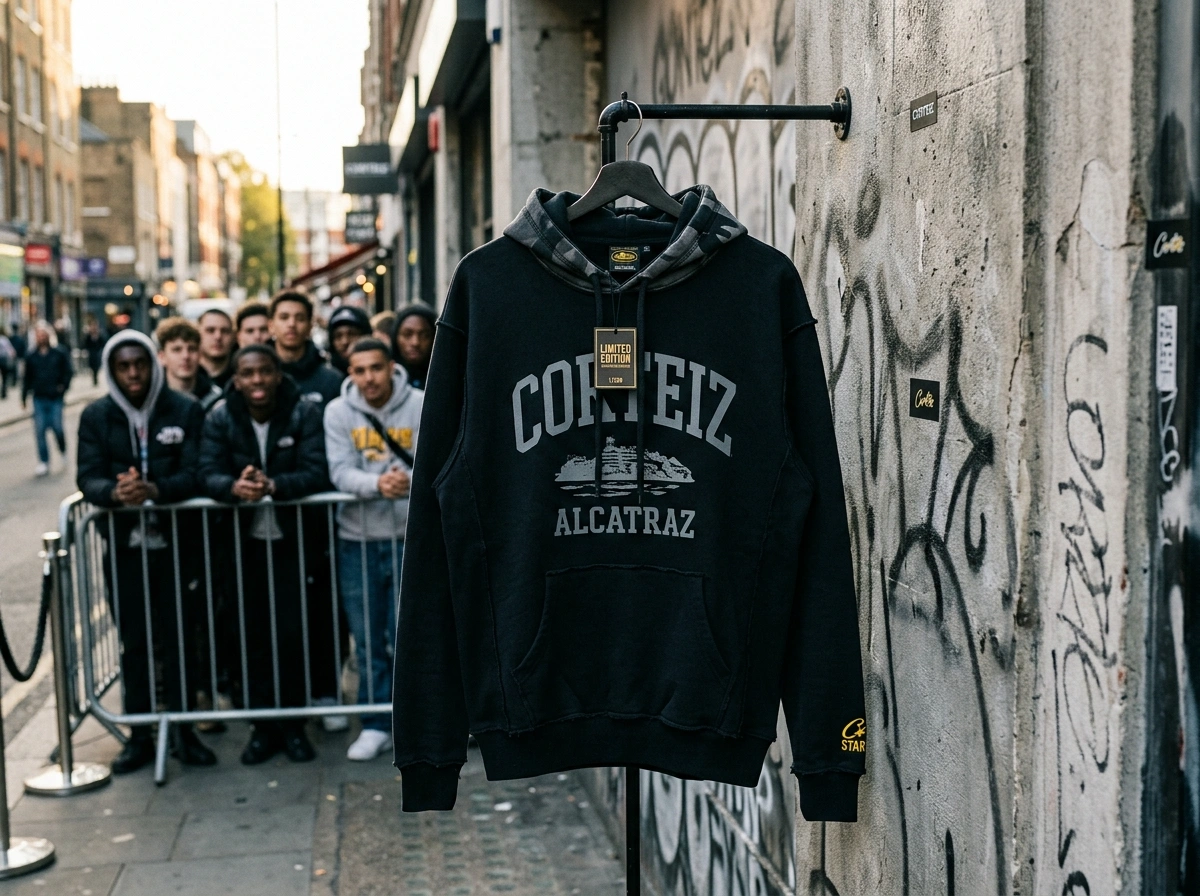
Walk through any major US city and you’ll spot it: the unmistakable Alcatraz logo stitched onto cargos, hoodies, and tees. Corteiz didn’t get here by flooding the market with product. Quite the opposite. The brand built its empire by making clothes hard to get. That strategy taps into something deeply human, and it explains why streetwear fans line up, refresh checkout pages, and pay resale premiums for a single hoodie.
Let’s break down how scarcity became the fuel behind one of streetwear’s most talked-about names, and why limited access keeps the hype machine running.
The Psychology of Scarcity in Streetwear
Scarcity works because of a simple truth about human nature: we want what we can’t easily have. Psychologists call it the scarcity principle, and marketers have leaned on it for decades. When something feels rare, our brains assign it more value. The harder the chase, the bigger the reward feels once we finally own it.
Streetwear takes this idea and turns it up to eleven. A limited drop isn’t just about selling clothes. It’s about belonging. When you snag a piece that only a few thousand people worldwide can claim, you’re not just buying fabric. You’re buying status, identity, and a story to tell.
There’s also a fear-of-missing-out factor at play. FOMO drives split-second decisions. If a product might sell out in ninety seconds, you don’t have time to overthink it. That urgency removes hesitation and pushes buyers to act fast. It’s a powerful emotional trigger, and streetwear brands have mastered it.
How Corteiz Turned Limited Drops Into a Movement
Founded in the UK by Clint419, Corteiz built its reputation on doing the opposite of what big fashion houses do. Instead of chasing maximum visibility, it locked down its product, kept its website password-protected for stretches, and treated access like a privilege rather than a right.
The brand’s drops are tightly controlled events. Pieces release in small batches, sell out almost instantly, and rarely return. That deliberate shortage keeps demand sky-high. Fans know that if they miss a drop, there’s no guarantee it’ll ever come back. So they show up, every time.
Corteiz also leans hard into guerrilla-style marketing. Surprise pop-ups, cryptic social posts, and location-based scavenger hunts have all played a role. One famous activation had fans trade designer jackets for Corteiz pieces, a stunt that generated massive buzz and reinforced the idea that this brand plays by its own rules. These moments turn shopping into an experience, and experiences spread fast across digital media.
The genius here is restraint. By refusing to oversaturate, Corteiz protects the perceived value of every single item. Each piece stays special precisely because there isn’t an endless supply.
The Cultural Impact: More Than Just Clothes
Corteiz has become a cultural marker, especially among younger, fashion-forward consumers across diverse communities. In the US, where streetwear has deep roots in skate, hip-hop, and sneaker culture, the brand slots right into a long tradition of style signaling identity.
Wearing Corteiz says something. It signals that you’re plugged into the culture, that you move fast, and that you’ve earned access to something others couldn’t get. That social currency matters. In an age where what you wear gets photographed, posted, and shared constantly, owning the right rare piece carries real weight.
The brand also resonates because it feels authentic rather than corporate. Its anti-establishment energy, community-first approach, and grassroots growth give it credibility that money alone can’t buy. Fans don’t feel like customers. They feel like members of something.
How Corteiz Compares to Other Streetwear Giants
Corteiz didn’t invent the scarcity playbook. Supreme practically wrote it. For years, the New York label has dropped limited collections every Thursday, creating weekly frenzies and resale markets where a simple box logo tee can fetch hundreds of dollars. The model is nearly identical: controlled supply, relentless demand, and a community willing to chase.
Nike’s SNKRS app uses the same logic. Limited sneaker releases, raffle-style purchasing, and instant sellouts have made certain pairs nearly impossible to buy at retail. The resale market that follows only adds to the mystique.
What sets Corteiz apart is its rawness. While some brands have grown more polished and commercial over time, Corteiz has kept its edge sharp. It still feels like an underground operation, even as it scales globally. That balance between mystery and momentum is tough to pull off, and it’s a big part of why the brand stands out in a crowded field.
Here’s a quick comparison of how these brands use scarcity:
|
Brand |
Scarcity Tactic |
Signature Move |
|---|---|---|
|
Corteiz |
Surprise drops, locked access |
Guerrilla pop-ups and trade-ins |
|
Supreme |
Weekly limited releases |
Box logo collabs |
|
Nike SNKRS |
Raffle-based sneaker drops |
App-exclusive launches |
Why Consumers Crave Rare Items
So why do people work this hard for clothing? It comes down to a few overlapping motivations.
Identity and self-expression. Rare pieces let people stand out. In a sea of mass-produced fashion, owning something limited feels like a statement of individuality.
Community and belonging. Streetwear is tribal. Copping a hard-to-get drop earns respect within the community and connects you to others who share the same passion.
Investment potential. Many limited items hold or grow in value on the resale market. Some buyers treat drops like assets, flipping pieces for profit. That financial upside adds another layer of appeal.
The thrill of the hunt. Let’s be honest, the chase is fun. Beating the clock, securing the bag, and landing a coveted item delivers a genuine rush. That dopamine hit keeps people coming back.
These motivations stack on top of each other, and brands like Corteiz understand exactly how to activate all of them at once.
What Brands Can Learn From the Corteiz Approach
For anyone watching the streetwear space, Corteiz offers a clear lesson: more isn’t always better. Restraint, mystery, and genuine community can outperform massive ad budgets and endless inventory.
The brand proves that consumers don’t just want products. They want stories, access, and a sense of belonging. When you give people something rare and meaningful, you create loyalty that money can’t easily buy. That emotional connection turns one-time buyers into lifelong fans who evangelize the brand for you.
Of course, the strategy only works when the product backs it up. Scarcity creates buzz, but quality and authentic culture keep it alive. Corteiz delivers on both, which is why it has staying power instead of fading like so many hype-driven flashes.
Final Thoughts
Corteiz didn’t rise to the top by playing it safe. It rose by understanding what makes people tick. By keeping supply tight, building a fiercely loyal community, and treating every drop like an event, the brand turned scarcity into its greatest asset.
For streetwear enthusiasts, the appeal is obvious. Owning a rare piece feels special because it is. As long as that hunger for exclusivity keeps burning, brands that master the art of scarcity will keep dominating the culture. And right now, few do it better than Corteiz.