Money slips through our fingers in ways we barely notice. A coffee here, a subscription there, an impulse buy that felt right in the moment. Add it all up over a year, and the numbers can be shocking. Most of us aren’t reckless spenders. We just lack a simple system that keeps our choices aligned with what we actually value.
That’s where Max80 thinking comes in. It’s a refreshingly practical approach to spending that helps you live well today while protecting your future. Instead of strict budgets that leave you feeling deprived, Max80 gives you a clear mental rule to follow. The result? Smarter decisions, less guilt, and steady progress toward your goals.
Let’s break down what Max80 thinking really means and how you can put it to work in your own life.
What Is Max80 Thinking?
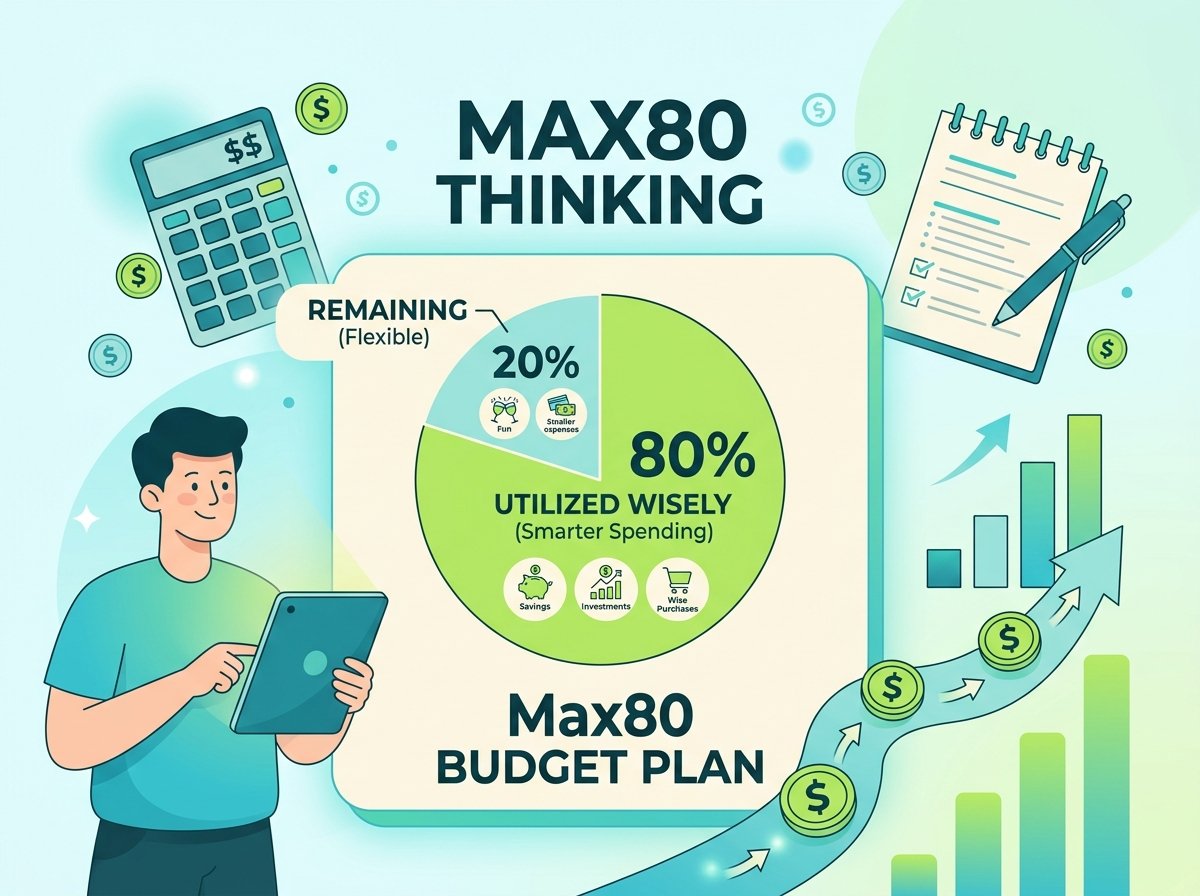
At its core, Max80 thinking is built around one simple idea: spend a maximum of 80% of your income, and protect at least 20% for saving, investing, and building security. The “80” acts as a ceiling, not a target. It reminds you that not every dollar needs a job in the present moment.
This mindset flips traditional budgeting on its head. Rather than tracking dozens of categories and feeling overwhelmed, you anchor every decision to one question: Am I staying under my 80%? That clarity makes spending choices faster and far less stressful.
The framework draws inspiration from communities focused on intentional living and financial freedom. If you want to dig deeper into the philosophy, Max80 offers helpful context on building a balanced relationship with money. The beauty of the approach is its flexibility. It works whether you earn a modest salary in Ohio or a six-figure income in California.
Why the 80/20 Split Works So Well
Our brains crave simplicity. When a system has too many rules, we abandon it. Max80 thinking succeeds because it gives you one clear boundary instead of a hundred small restrictions.
Here’s why the split is so effective:
- It creates automatic savings. By capping spending at 80%, that final 20% gets protected before you can spend it.
- It reduces decision fatigue. You stop agonizing over every purchase and focus on the big picture.
- It builds a cushion. That reserved portion becomes your emergency fund, retirement contribution, or investment seed.
- It still leaves room to enjoy life. You get to spend the majority of your income without guilt.
Financial experts often point out that consistency matters more than perfection. A steady 20% saved each month beats sporadic large deposits followed by months of nothing. Max80 turns that consistency into a habit.
Prioritizing Needs Over Wants
One of the biggest hurdles in personal finance is telling the difference between what we need and what we simply want. Max80 thinking forces that distinction in a gentle, practical way.
When your spending is capped, you naturally start ranking purchases. Rent, groceries, utilities, and transportation rise to the top. The third streaming service or the upgraded phone you don’t really need drops lower on the list.
A Simple Way to Sort Your Spending
Try splitting your 80% into three buckets:
- Essentials (50%) – housing, food, insurance, and transportation.
- Lifestyle (20%) – dining out, hobbies, entertainment, and travel.
- Flexible goals (10%) – debt payoff, big purchases, or extra savings.
This structure keeps your needs covered first while still allowing for the fun stuff. The exact percentages can shift based on your situation. Someone living in a high-cost city like New York may need more for essentials, while someone in a rural area might have more room for lifestyle spending.
Real-Life Examples of Max80 Thinking
Numbers feel abstract until you see them in action. Let’s look at two everyday scenarios.
Meet Sarah, a teacher in Texas. She earns $4,000 a month after taxes. Using Max80 thinking, she caps her spending at $3,200 and automatically transfers $800 into savings and investments. When she wanted a weekend getaway, she didn’t reach for a credit card. Instead, she trimmed her lifestyle bucket for two months and paid for the trip in cash. No debt, no stress.
Now consider James, a software developer in Seattle. He makes $7,500 a month. Even with a higher income, he kept his spending under $6,000 and directed $1,500 toward retirement and a home down payment fund. Within three years, he had enough saved to buy his first condo. The high cap gave him plenty to enjoy, but the protected 20% changed his financial future.
Both stories share a common thread: the spending ceiling created freedom rather than restriction.
Practical Tips to Start Spending Smarter
Ready to apply Max80 thinking to your own finances? Here are actionable steps you can take this week.
Automate Your Savings First
Set up an automatic transfer that moves 20% of every paycheck into a separate account. When the money leaves before you see it, you won’t miss it. This “pay yourself first” approach removes willpower from the equation.
Use Technology to Track Spending
The high tech adoption rate in the United States makes this easier than ever. Budgeting apps can sync with your bank accounts and alert you when you approach your 80% ceiling. A quick glance at your phone keeps you accountable without spreadsheets.
Pause Before Big Purchases
Adopt a 48-hour rule for any non-essential buy over $100. Often, the urge fades and you realize you didn’t need the item after all. This small delay protects your spending cap from impulse decisions.
Review Subscriptions Regularly
Recurring charges are silent budget killers. Once a quarter, scan your statements and cancel anything you no longer use. Most people find at least one forgotten subscription draining their account.
Adjust for Your Region and Goals
Remember, Max80 is a framework, not a rigid rule. If you live in an expensive city, you might need to push your essentials higher temporarily while you work toward earning more or relocating. The point is to keep that 20% protected whenever possible.
How Max80 Builds Long-Term Financial Wellness
Spending smarter isn’t just about the next paycheck. It’s about creating a life with less anxiety and more options.
When you consistently save 20% of your income, several powerful things happen over time:
- You build an emergency fund that covers surprises without debt.
- You invest earlier, giving compound growth more years to work in your favor.
- You gain peace of mind, knowing you have a financial buffer.
- You create choices, like changing careers, starting a business, or retiring sooner.
Financial wellness isn’t about having endless money. It’s about feeling in control of what you have. Max80 thinking delivers that control by keeping your spending intentional and your future protected.
Common Roadblocks and How to Overcome Them
Even the best framework meets resistance. Here are a few challenges you might face and how to handle them.
“My income is too low to save 20%.” Start smaller. Even 5% builds the habit. As your income grows, increase the percentage until you reach the full 20%.
“Unexpected expenses keep wrecking my plan.” That’s exactly why the protected portion matters. Once your emergency fund is solid, surprises stop derailing your progress.
“I keep slipping back into old habits.” Progress isn’t linear. If you overspend one month, reset the next. Consistency over time matters far more than a perfect record.
Final Thoughts
Smart spending doesn’t require deprivation or complicated math. It requires a simple, repeatable system you can trust. Max80 thinking gives you that system by setting a clear spending ceiling and protecting a meaningful slice of your income.
Start today. Pick your 80% cap, automate your savings, and watch how quickly small changes add up. Over months and years, this approach can transform your relationship with money, replacing stress with confidence and uncertainty with security.
Your future self will thank you for every smart choice you make now.