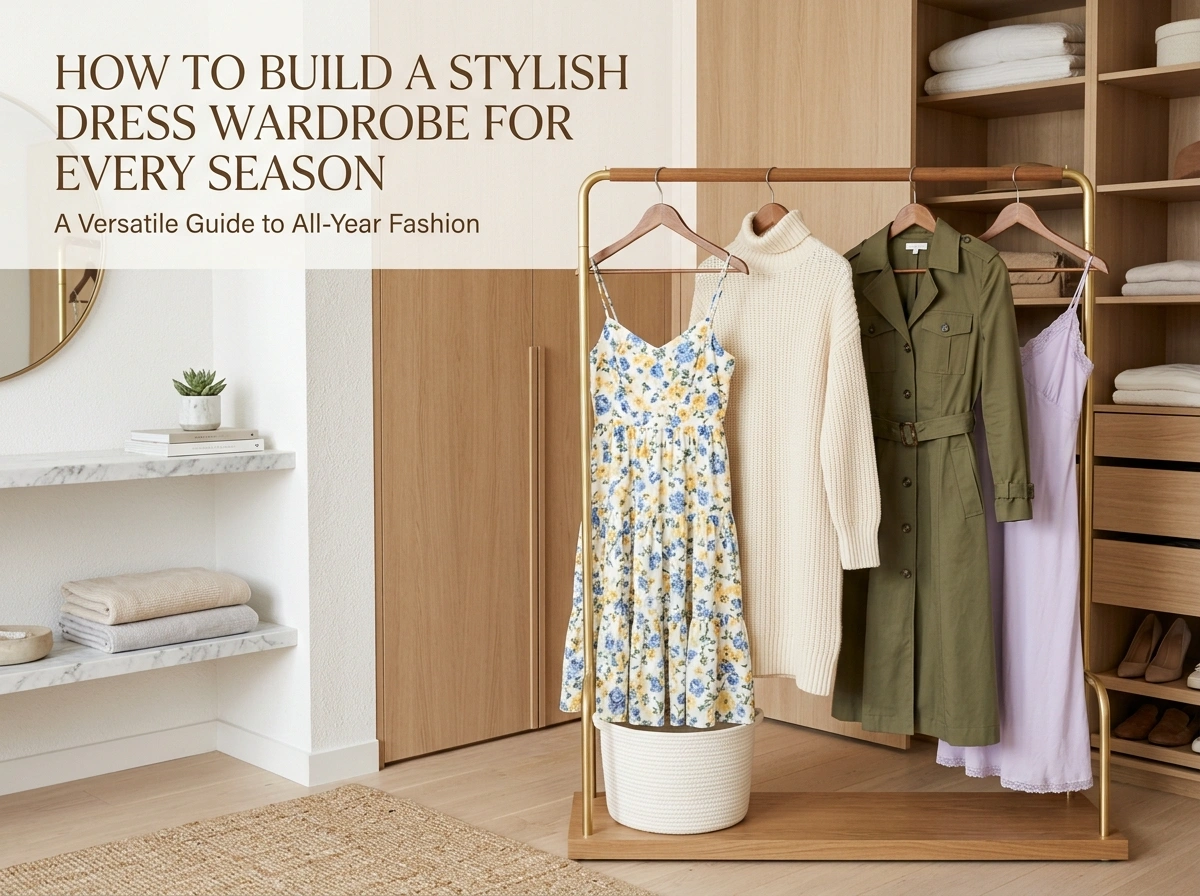
A great dress does more than one job. It carries you from a busy workday to a weekend brunch, from a spring garden party to a cozy winter dinner. Yet most closets are full of dresses that only work a few weeks each year. The result? You stare at a packed rail and still feel like you have nothing to wear.
Building a seasonal dress wardrobe fixes that problem. With the right mix of fabrics, colors, and silhouettes, you can stay stylish through every temperature swing without buying a whole new closet each season. This guide walks you through what to keep for spring, summer, fall, and winter, plus the transitional pieces that quietly do the heavy lifting all year.
Key takeaways:
- Choose fabrics that match the weather, not just the trend.
- Build around a flexible color base you can restyle.
- Invest in a few transitional dresses that cross seasons.
- Use layers and accessories to stretch each piece further.
Why a Seasonal Dress Wardrobe Works
A seasonal approach saves money and mental energy. Instead of chasing every trend, you build a core collection that adapts. You shop with intention, rotate pieces as the weather changes, and lean on styling tricks to refresh old favorites.
Think of it as a system. Each season gets a few dedicated pieces, and a smaller group of versatile dresses ties everything together. That balance keeps your closet manageable and your outfits fresh.
Spring: Light, Fresh, and Ready to Bloom
Spring is about renewal, so your dresses should feel light and easy. Temperatures shift quickly, which means comfort and layering matter most.
Best Fabrics for Spring
- Cotton and cotton blends: Breathable and forgiving on warmer afternoons.
- Lightweight denim: Great for shirt dresses that handle cool mornings.
- Chambray: Soft, casual, and easy to layer under cardigans.
Colors and Silhouettes
Reach for soft pastels, floral prints, and fresh neutrals like ivory and sage. A-line and wrap dresses flatter most body types and move well in a spring breeze.
Spring Styling Tips
- Layer a denim jacket or lightweight cardigan for chilly mornings.
- Add white sneakers for a relaxed daytime look.
- Swap in ballet flats or low heels to dress it up for work.
Try this first: Pick one floral wrap dress and one solid cotton shirt dress. Together they cover casual and semi-formal spring occasions.
Summer: Cool, Breathable, and Effortless
Summer dresses should keep you comfortable when the heat climbs. The goal is airflow, easy movement, and colors that feel bright.
Best Fabrics for Summer
- Linen: Ultra-breathable and stylishly relaxed, even when slightly wrinkled.
- Lightweight rayon or viscose: Drapes beautifully and feels cool.
- Cotton voile: Soft and airy for hot days.
Colors and Silhouettes
White, coral, sky blue, and sunny yellow all shine in summer. Loose silhouettes work best, think slip dresses, sundresses, and flowy maxi styles that skim the body rather than cling.
Summer Styling Tips
- Pair a maxi dress with flat sandals for a beach-ready look.
- Add a straw bag and sunglasses for instant polish.
- Throw a linen shirt over a slip dress for a covered daytime option.
Try this first: A white linen midi dress is your summer workhorse. Dress it down with sandals or up with heels and gold jewelry.
Fall: Rich Tones and Smart Layers
Fall is where dresses get interesting. Cooler air invites layering, richer colors, and slightly heavier fabrics without going full winter yet.
Best Fabrics for Fall
- Knit and sweater dresses: Cozy and easy to style.
- Ponte and thicker jersey: Structured but comfortable.
- Corduroy or brushed cotton: Adds texture and warmth.
Colors and Silhouettes
Lean into deep tones like rust, olive, burgundy, and mustard. Fitted knit dresses, shirt dresses, and midi styles pair well with boots and tights.
Fall Styling Tips
- Layer a turtleneck under a sleeveless dress for extra warmth.
- Add ankle boots and a wide belt to define your waist.
- Top it with a trench coat or leather jacket for edge.
Try this first: A ribbed knit midi dress works alone on mild days and layers under coats when the temperature drops.
Winter: Warm, Polished, and Layer-Friendly
Winter dressing proves you don’t have to give up dresses in the cold. With smart layers and warmer fabrics, dresses stay in rotation all season.
Best Fabrics for Winter
- Wool and wool blends: Warm and elegant.
- Heavy knits: Sweater dresses become everyday staples.
- Velvet: Perfect for holiday events and dressier occasions.
Colors and Silhouettes
Deep jewel tones, charcoal, black, and cream feel seasonally right. Long-sleeve sheath dresses and sweater dresses offer coverage and structure.
Winter Styling Tips
- Wear fleece-lined tights under any dress for real warmth.
- Add knee-high or over-the-knee boots for coverage and style.
- Finish with a wool coat and a chunky scarf.
Try this first: A black long-sleeve sheath dress covers work, dinners, and holiday parties with just a change of accessories.
Transitional Dresses That Cross Seasons
Some dresses refuse to stay in one season, and those are the pieces worth investing in. Transitional dresses reduce clutter and simplify getting dressed.
Look for these versatile styles:
- The wrap dress: Adjustable fit works in any climate with the right layers.
- The shirt dress: Casual in summer, layered and belted in fall.
- The knit midi: Alone in spring, layered in winter.
- The little black dress: Endlessly restyled with accessories and outerwear.
The trick is neutral colors and simple silhouettes. A camel, black, or navy dress accepts almost any jacket, boot, or accessory you own.
How to Style One Dress Multiple Ways
Getting more from each dress is the heart of a smart wardrobe. Small changes create completely different looks.
Try these quick swaps:
- Layering: Add a turtleneck underneath or a blazer on top.
- Footwear: Sandals, sneakers, ankle boots, or heels shift the whole vibe.
- Accessories: A belt, scarf, or statement necklace redefines the outfit.
- Outerwear: A denim jacket reads casual, while a wool coat reads refined.
Example: Take a simple black midi dress. In summer, pair it with sandals and a straw bag. In fall, add tights, boots, and a leather jacket. In winter, layer a turtleneck underneath and top it with a long coat. One dress, three seasons, three looks.
Building Your Wardrobe on a Budget
You don’t need to buy everything at once. Start with a few core dresses in neutral tones, then add seasonal pieces gradually.
Focus your spending like this:
- Invest in transitional staples you’ll wear year-round.
- Save on trend-driven or single-season pieces.
- Reuse what you own by restyling before buying new.
Quality basics cost more upfront but last longer, which makes them cheaper over time.
Final Thoughts
A stylish dress wardrobe for every season isn’t about owning more. It’s about owning the right pieces and knowing how to wear them. Choose fabrics that fit the weather, build around a flexible color base, and lean on transitional dresses that carry you across seasons. Then let layers and accessories do the rest.
Start today by pulling out your favorite dress and listing three ways to style it for the current season. From there, fill the small gaps in your closet one thoughtful purchase at a time, and you’ll always have something to wear, no matter the weather.
Please visit website for more info.