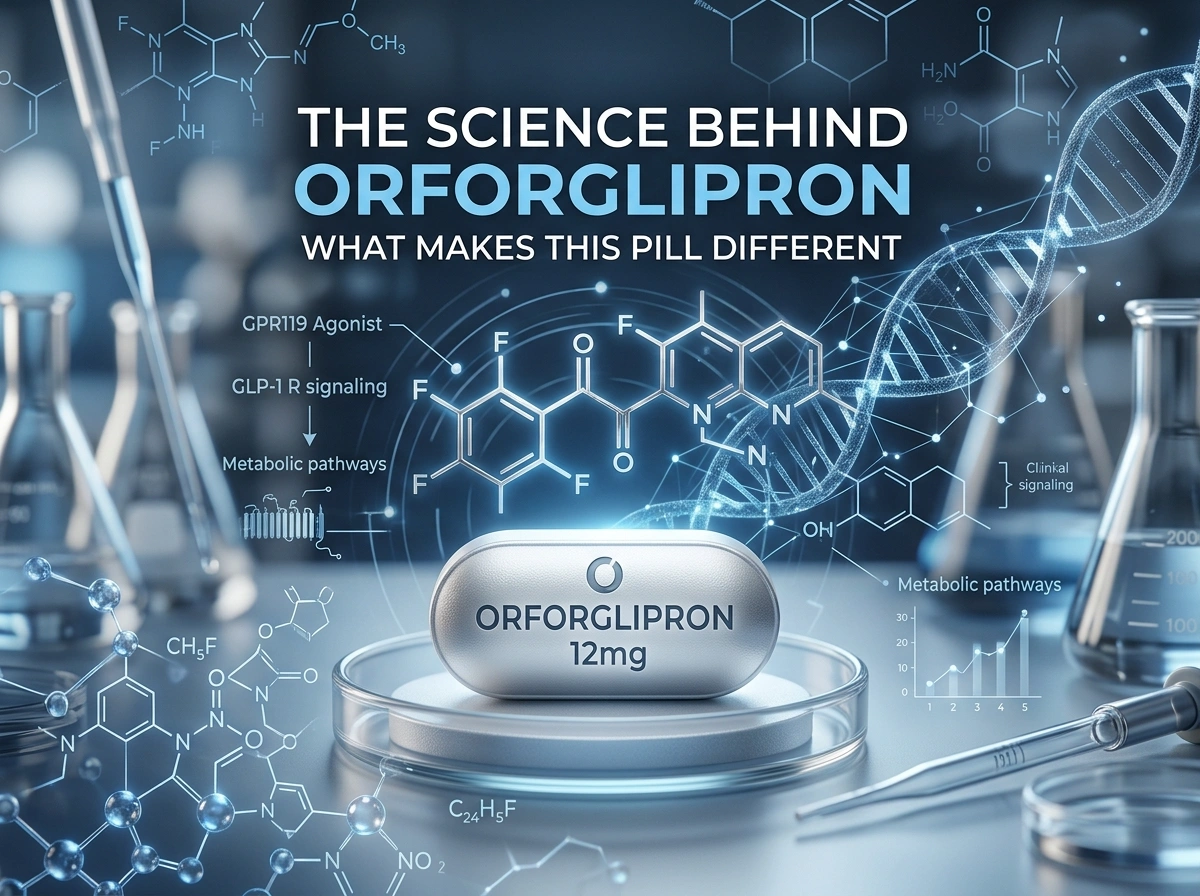
A daily pill that delivers the benefits people once expected only from weekly injections sounds almost too convenient. Yet that is exactly the promise behind orforglipron, an oral GLP-1 receptor agonist drawing serious attention from researchers, clinicians, and people managing weight and blood sugar. If you have followed the rise of injectable medications like semaglutide and tirzepatide, you may wonder how a simple tablet could compete.
This article breaks down the science in plain language. You will learn how orforglipron works inside the body, why its oral form matters, what clinical trials have shown, and where this treatment might be headed.
Key takeaways:
- Orforglipron mimics a natural gut hormone to control appetite and blood sugar.
- Its small-molecule design makes a once-daily pill possible.
- Early trial data suggests meaningful weight loss and improved glucose control.
What Is Orforglipron?
Orforglipron is a once-daily oral medication being developed as a GLP-1 receptor agonist. GLP-1 stands for glucagon-like peptide-1, a hormone your gut naturally releases after you eat. This hormone tells your body to release insulin, slow digestion, and signal fullness to your brain.
Most GLP-1 drugs on the market today are peptides, which means they are made of protein-like chains. Peptides break down quickly in the stomach, so they usually require injection. Orforglipron is different. It is a small-molecule, non-peptide compound, which allows it to survive digestion and work as a pill. You can read more technical background on orforglipron and its development.
How Orforglipron Works in the Body
To understand what makes this pill stand out, it helps to look at its mechanism of action step by step.
1. It Activates the GLP-1 Receptor
Orforglipron binds to and activates the same GLP-1 receptor that natural GLP-1 targets. When this receptor switches on, it triggers a chain of helpful responses across the pancreas, gut, and brain.
2. It Boosts Insulin When You Need It
After a meal, blood sugar rises. Orforglipron encourages the pancreas to release insulin in a glucose-dependent way. In simple terms, it helps lower blood sugar mainly when sugar is high, which reduces the risk of dangerous lows.
3. It Slows Digestion
The medication slows how quickly food leaves your stomach. This steadies blood sugar after meals and helps you feel full for longer.
4. It Calms Appetite
Perhaps the most noticeable effect happens in the brain. By acting on appetite centers, orforglipron reduces hunger and cravings. Many people simply eat less without forcing themselves to.
Quick takeaway: Orforglipron uses the body’s own hunger and blood sugar signals rather than overriding them.
What Makes Orforglipron Different From Injectable GLP-1 Drugs
Injectable medications like semaglutide changed the conversation around weight and diabetes. So why does an oral option matter so much? The differences go beyond convenience.
A Non-Peptide Structure
Semaglutide and similar drugs are peptides, which the digestive system tends to destroy. To survive as a pill, oral semaglutide must be paired with an absorption enhancer and taken under strict conditions, such as on an empty stomach with limited water.
Orforglipron avoids this hurdle entirely. Its small-molecule design resists digestion, so it does not depend on a special carrier to be absorbed.
Fewer Food and Timing Restrictions
Because of its chemistry, orforglipron is being studied without the rigid food and water rules that complicate other oral options. That flexibility makes daily use far easier to stick with.
Easier Manufacturing and Distribution
Small molecules are generally simpler and cheaper to produce at scale than peptides. This could improve supply and access, an ongoing problem with popular injectable drugs.
No Needles
For many people, the fear of injections is a real barrier. A pill removes that obstacle and may encourage more people to start treatment.
Bioavailability: The Hidden Advantage
Bioavailability describes how much of a drug actually reaches your bloodstream in active form. For oral peptide drugs, bioavailability is often very low, sometimes just 1% or less, which is why precise timing matters so much.
Orforglipron’s non-peptide structure gives it more reliable and predictable absorption. Consistent absorption means steadier drug levels in the body, which can translate into more dependable results and a smoother experience for the user.
This reliability is one of the strongest scientific arguments in favor of the pill.
What the Clinical Trials Show
Early and mid-stage clinical studies have generated encouraging results in two main areas: weight loss and type 2 diabetes management.
Weight Loss Results
In trials involving adults with obesity, participants taking orforglipron experienced meaningful weight reduction over several months. The amount of weight lost generally increased with higher doses, and many results approached the range seen with leading injectable therapies.
Type 2 Diabetes Results
For people with type 2 diabetes, the drug lowered HbA1c, a key marker of long-term blood sugar control. Participants also saw improvements in fasting glucose. These outcomes suggest orforglipron could serve as a strong oral option for managing diabetes.
Side Effects to Know
Like other GLP-1 medications, the most common side effects are digestive. These include:
- Nausea
- Vomiting
- Diarrhea
- Reduced appetite
These effects are usually mild to moderate and often fade as the body adjusts. Doctors typically start patients on a low dose and increase it gradually to limit discomfort.
Who Might Benefit Most
Orforglipron may appeal to several groups, though only a healthcare provider can decide if it is appropriate.
- People who avoid injections. A pill removes a major barrier to treatment.
- Those seeking convenience. A once-daily tablet fits easily into most routines.
- Patients managing type 2 diabetes. Improved glucose control adds value.
- People focused on weight management. Appetite reduction supports gradual, sustainable change.
Who This Is Not For
This medication is not a quick fix or a substitute for healthy habits. It is also not suitable for everyone, including people with certain medical histories. Always consult a qualified professional before starting any GLP-1 therapy.
Common Misconceptions
A few myths tend to circulate around medications like this one.
- “It melts fat directly.” It does not. It reduces appetite and improves metabolic signals, which leads to weight loss over time.
- “Pills always work less than injections.” Orforglipron’s design challenges that assumption by delivering competitive results in trials.
- “You can stop once you reach your goal.” Stopping may lead to regaining weight if lifestyle changes do not continue.
The Future Outlook
Orforglipron sits at an exciting point in medical research. If larger, long-term trials confirm its safety and effectiveness, it could become one of the first widely available oral GLP-1 options that rivals injectables.
The bigger picture is access. An easy-to-make, easy-to-take pill could reach far more people than current therapies, especially in regions where cold storage and injection supplies are hard to manage. Researchers are also studying its long-term effects on heart health, a frontier that could expand its role even further.
Conclusion
Orforglipron stands out because of smart chemistry. By using a non-peptide, small-molecule design, it delivers the appetite control and blood sugar benefits of GLP-1 therapy in a convenient daily pill, without the absorption struggles that limit other oral options. Clinical trials so far point to strong potential for both weight loss and type 2 diabetes management.
The science is promising, but it is not a replacement for professional guidance. If you are curious whether this treatment could fit your health goals, talk with your doctor about the latest research and whether you may be a good candidate.