Metabolic research has shifted fast over the past decade. Scientists once focused on single targets to influence blood sugar and body weight. Now, multi-receptor molecules are reshaping how researchers think about metabolism. Retatrutide sits at the center of this conversation.
In this article, you’ll learn what retatrutide is, what “triple-receptor agonist” actually means, and how targeting three different receptors may affect appetite, energy use, and metabolic signaling. We’ll keep the language clear and the tone balanced, without medical claims or guarantees. By the end, you’ll understand the basic science driving so much current interest in this peptide.
What Is Retatrutide?
Retatrutide is an investigational peptide studied for its effects on metabolic pathways. A peptide is a short chain of amino acids—smaller than a full protein but built from the same molecular pieces. These chains can act as signaling molecules, telling cells how to behave.
What makes the retatrutide peptide notable is its design. Rather than activating a single receptor, it engages three at once. This multi-target approach is the reason it falls into a newer category of research compounds. Scientists study it to better understand how combined receptor signaling influences metabolism.
It’s worth stating plainly: retatrutide remains a subject of ongoing research. Nothing here should be read as guidance on use, dosing, or outcomes.
What Does “Triple-Receptor Agonist” Mean?
The term sounds technical, but the idea is straightforward. Let’s break it into two parts.
Understanding “Agonist”
An agonist is a molecule that binds to a receptor and activates it. Think of a receptor as a lock and the agonist as a key that turns it. When the key fits and turns, the cell receives a signal and responds.
Many hormones in the body act as natural agonists. They bind to specific receptors and trigger downstream effects, like releasing insulin or signaling fullness.
Understanding “Triple-Receptor”
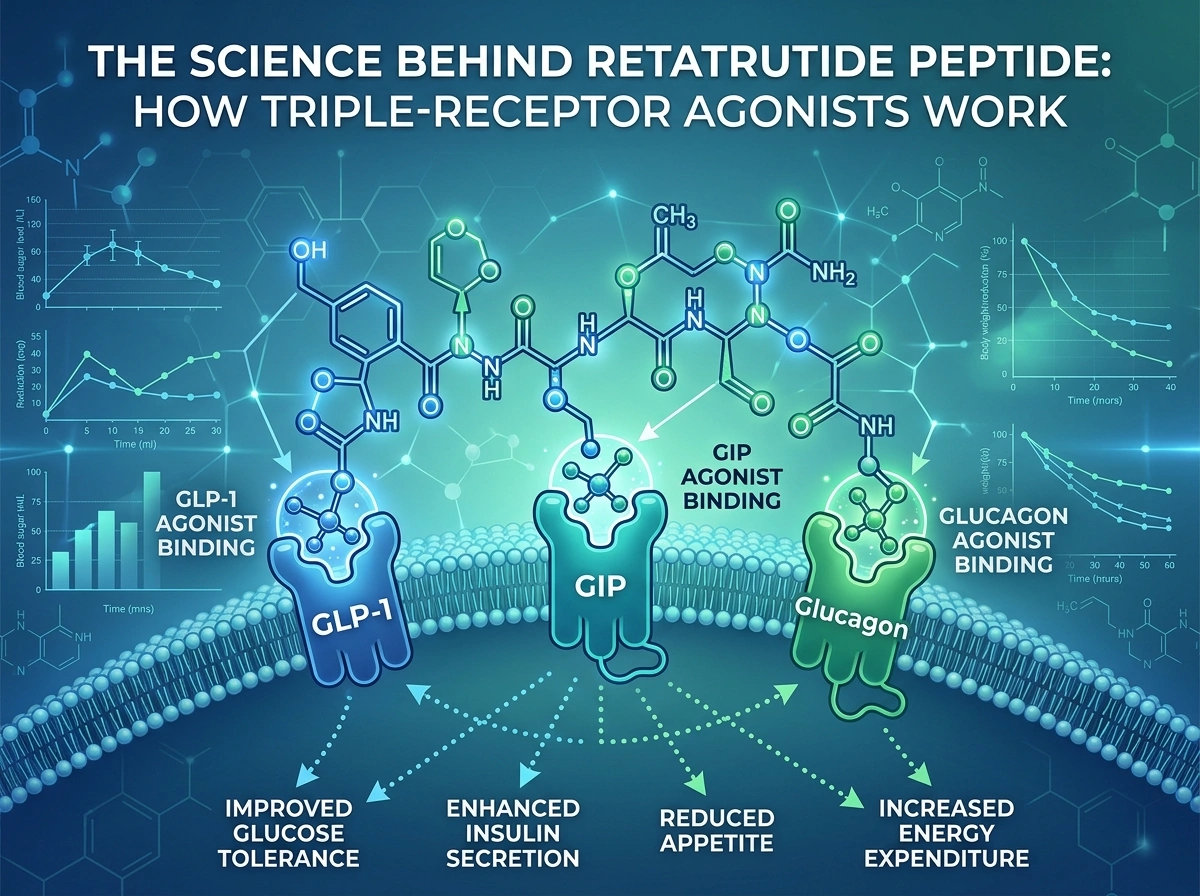
A single-receptor agonist activates one lock. A triple-receptor agonist activates three. Retatrutide is designed to engage the GLP-1 receptor, the GIP receptor, and the glucagon receptor.
Earlier research compounds often targeted one or two of these. Combining all three in one molecule is a more recent development. The goal is to study how layered signaling affects metabolic processes that single targets cannot fully address on their own.
The Three Receptors Explained
Each receptor plays a distinct role in metabolism. Understanding them separately helps clarify why combining them draws so much research attention.
GLP-1 Receptor
GLP-1 stands for glucagon-like peptide-1. This receptor is well studied in metabolic science. Activating it is associated with effects on blood sugar regulation and feelings of fullness.
In research settings, GLP-1 receptor activity has been linked to slower stomach emptying and reduced appetite signaling. These effects make it a frequent focus in weight-management and metabolic studies.
GIP Receptor
GIP stands for glucose-dependent insulinotropic polypeptide. This receptor is involved in how the body processes nutrients after eating. Its role is more nuanced and still actively debated among researchers.
When studied alongside GLP-1, GIP receptor activity appears to add another layer to metabolic signaling. Scientists are interested in how the two interact and whether the combination changes the overall response.
Glucagon Receptor
Glucagon is often described as the counterpart to insulin. The glucagon receptor is connected to energy mobilization and how the body uses stored fuel. Activating it may influence energy expenditure—essentially, how many calories the body burns.
This is the receptor that sets retatrutide apart from many earlier compounds. Adding glucagon receptor activity introduces a potential effect on energy output, not just intake.
How the Three Targets May Work Together
Here’s where the science gets interesting. Each receptor contributes a different piece, and researchers study how they combine.
- Appetite regulation: GLP-1 and GIP activity may influence hunger and fullness signals.
- Blood sugar handling: Both GLP-1 and GIP are tied to how the body manages glucose after meals.
- Energy expenditure: Glucagon receptor activity may affect how the body burns stored energy.
The theory behind triple agonism is balance. By acting on intake and output at the same time, the molecule may influence metabolism from multiple angles. This is why researchers find the approach compelling compared to single-target compounds.
A Simple Way to Picture It
Imagine managing a budget. One tool helps you spend less. Another helps you earn more. Using both together changes your financial picture faster than either alone.
A triple-receptor agonist works on a similar logic in metabolic research. It may reduce intake signals while also influencing energy use. The combination is what makes the science worth studying.
Why Researchers Are Paying Attention
The metabolic field has long searched for ways to address weight and energy balance through multiple pathways at once. Single-target compounds offered useful insights but covered only part of the picture.
Retatrutide’s three-receptor design lets scientists explore questions that simpler molecules couldn’t answer. How do these receptors interact? Does combined signaling produce different results than separate activation? These are the questions driving current research.
That said, more activity does not automatically mean better outcomes. Researchers carefully study how the body responds to multi-receptor signaling, including safety and tolerability. Balanced investigation matters as much as enthusiasm.
Common Misunderstandings to Avoid
When a topic gains attention, myths follow. Here are a few points to keep clear:
- “More receptors always means better results.” Not necessarily. Research evaluates effects carefully, and complexity brings new questions.
- “Peptides and proteins are the same thing.” They’re related but different. Peptides are shorter chains.
- “Research findings equal proven outcomes.” Investigational compounds are still being studied. Conclusions take time and rigorous testing.
Keeping these distinctions in mind helps you read about retatrutide with a clearer, more critical eye.
What the Science Suggests So Far
Current understanding points to a molecule designed to influence several metabolic levers at once. The GLP-1 and GIP receptors connect to appetite and glucose handling. The glucagon receptor connects to energy expenditure.
Together, these targets form the basis of triple-agonist research. Scientists continue to study how these mechanisms behave, how they interact, and what the long-term picture looks like. The work remains ongoing, and findings should always be read in that context.
Conclusion
Retatrutide represents a step forward in how researchers think about metabolic signaling. As a triple-receptor agonist, it engages GLP-1, GIP, and glucagon receptors—pathways tied to appetite, glucose handling, and energy use. The science behind it is grounded in combining multiple targets rather than relying on one.
If you want to explore this topic further, keep reading peer-reviewed summaries and credible research updates. Understanding the basic mechanisms is the best starting point for following where this science goes next.